
This comprehensive guide is designed to be the ultimate resource for common law partners in Ontario. Whether you are just moving in together, considering a cohabitation agreement, or navigating the painful process of separation, this page provides the deep legal insights and practical advice you need to protect your future.
Defining "Common Law" in Ontario: It's Not Just One Rule
One of the primary reasons for confusion is that "common law" does not have a single definition in Canada. Your status depends entirely on which law is being applied.

The Family Law Act (FLA) Definition
For the purposes of claiming spousal support in Ontario, the Family Law Act defines a "spouse" as two people who are not married to each other and have:
- Lived together continuously for a period of not less than three years; or
- Lived together in a relationship of some permanence, if they are the parents of a child.
The Canada Revenue Agency (CRA) Definition
For federal tax purposes, the rules are much stricter. The CRA considers you common law if you have lived together in a conjugal relationship for 12 continuous months, or immediately if you have a child together. This affects your tax credits, GST/HST rebates, and Canada Child Benefit (CCB) eligibility.
The Immigration (IRCC) Definition
For sponsorship purposes, the federal government also uses a one-year cohabitation standard.
Being "common law" for your taxes or immigration does not mean you have spousal support rights under Ontario law until you hit the three-year mark (unless you have a child). This discrepancy is a frequent trap for the unwary.
The Conjugal Relationship: What Does "Living Together" Actually Mean?
The law looks beyond just sharing a roof. To be considered "common law," you must be in a conjugal relationship. Ontario courts use the "Molodowich factors" to determine if a relationship is truly conjugal:
| Factor | Description |
|---|---|
| Shelter | Did the parties live under the same roof? What were the sleeping arrangements? |
| Sexual/Personal Behavior | Did they have a sexual relationship? Were they faithful? Did they maintain a domestic life together? |
| Services | How did they share household chores? (Cooking, cleaning, laundry). |
| Social | Did they present themselves to the world as a couple? Did they attend family events together? |
| Societal | What was the attitude of the community toward them as a couple? |
| Economic Support | Did they share expenses? Was there financial interdependence? |
| Children | How did they interact with each other's children or children of the union? |
At IQBAL LAW, we help clients gather the evidence necessary to prove or disprove the existence of a common law relationship based on these complex criteria.
Property Rights: The "Marriage Myth" Debunked
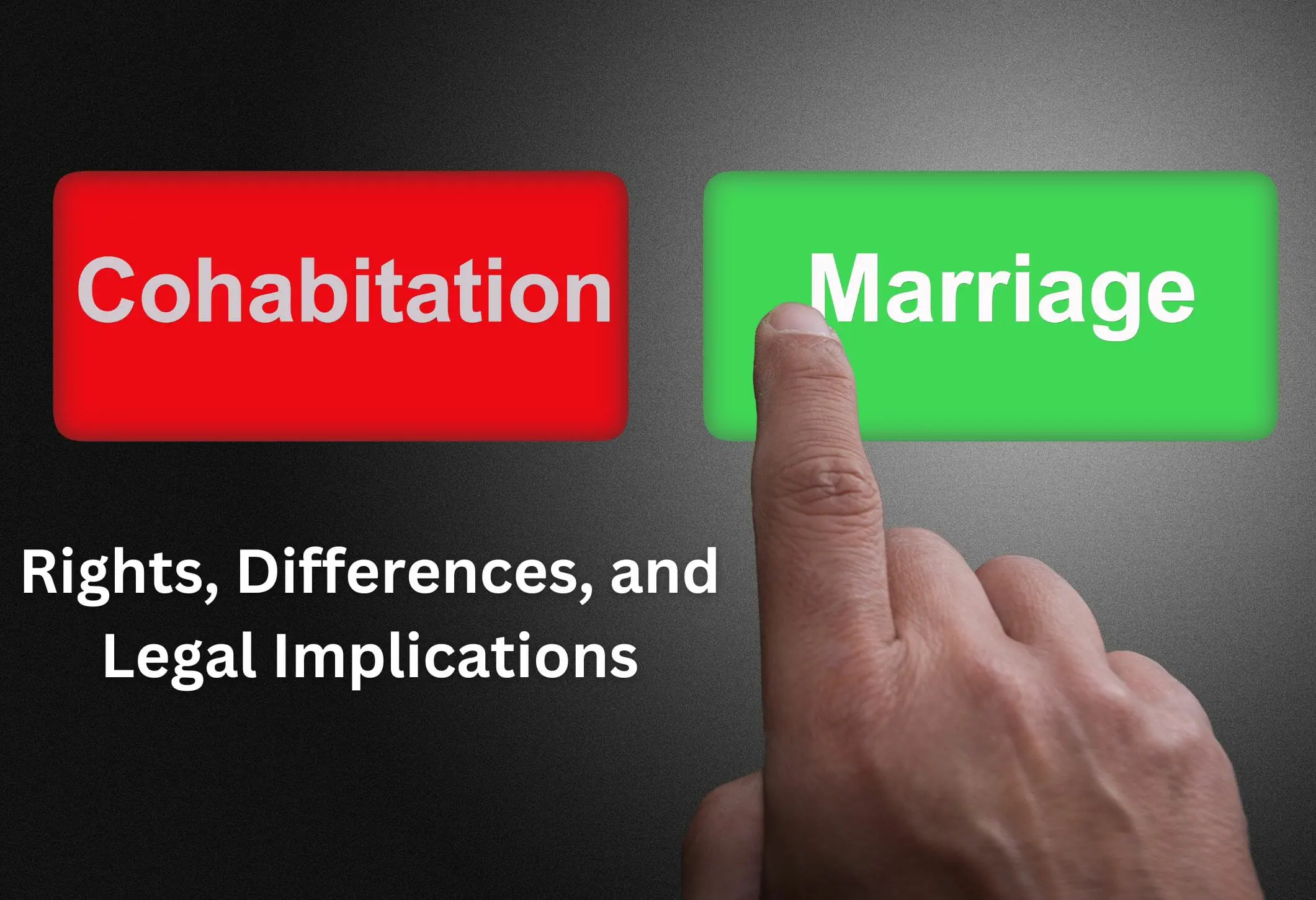
The single most important distinction in Ontario law is that common law partners have no statutory right to property division.
In a marriage, the Family Law Act creates a "partnership of equals" where the value of all assets grown during the marriage is equalized (split 50/50). This does NOT apply to common law couples.
The "What's Mine is Mine" Rule
If you are common law:
- If the house is in your partner's name, it is their house.
- If the car is in your partner's name, it is their car.
- If the savings account is in your partner's name, it is their money.
The Matrimonial Home Exception
For married couples, the "matrimonial home" has special status—both spouses have an equal right to possession, even if only one is on the title. Common law partners do not have this right. If you live in a home owned solely by your partner and you separate, they can legally change the locks (after providing reasonable notice).
Unjust Enrichment and the "Joint Family Venture"
Since there is no automatic property splitting, how do you get your fair share if you contributed to your partner's wealth? The answer lies in the equitable doctrine of Unjust Enrichment.
In the landmark case of Kerr v. Baranow, the Supreme Court of Canada established that a common law spouse can claim a share of assets if they can prove a Joint Family Venture (JFV).
The Four Pillars of a Joint Family Venture:
Mutual Effort
Did you work together toward common goals? (e.g., one partner works while the other manages a home renovation).
Economic Integration
Did you pool your finances? Did you have joint bank accounts or share all household expenses?
Actual Intent
Did you behave as if you were a single economic unit?
Priority of the Family
Did one partner limit their career or financial growth for the sake of the family unit?
Constructive Trust Claims
If you can prove a JFV, the court may award a Constructive Trust, giving you a percentage interest in the property itself, or a monetary award to compensate for your contributions.
Spousal Support: Your Rights Are Real
While property rights are limited, spousal support rights for common-law partners are identical to those of married spouses, provided you meet the three-year cohabitation threshold (or one year with a child).
How Entitlement is Determined
You are not "automatically" entitled to support. You must prove one of the following:
- Compensatory Basis: You suffered a financial disadvantage because of the roles in the relationship (e.g., you stayed home to raise kids while your partner built a career).
- Non-Compensatory Basis (Needs-Based): You have a financial need, and your partner has the ability to pay.
- Contractual Basis: You have a cohabitation agreement that specifies support payments.
The Spousal Support Advisory Guidelines (SSAG)
Once entitlement is proven, the amount and duration are calculated using the SSAG. Factors include the length of the relationship, the income gap, and the ages of the parties. At IQBAL LAW, we use specialized software to provide precise support calculations to ensure our clients receive every dollar they are entitled to—or are protected from overpaying.
Children: The Law Sees No Difference
In Ontario, the Children's Law Reform Act (CLRA) ensures that children of common-law parents have the exact same rights as children of married parents.
Decision-Making Responsibility (Formerly Custody)
This refers to the right to make major decisions about a child's life:
- Education
- Religion
- Non-emergency medical care
- Extra-curricular activities
Parenting Time (Formerly Access)
This is the schedule of when the child spends time with each parent. The "best interests of the child" is the only legal standard used to determine these arrangements.
Child Support
Child support is the right of the child, not the parent. It is calculated based on the Federal Child Support Guidelines, using the paying parent's gross annual income and the number of children. Common law parents cannot "waive" child support in an agreement, as the court always maintains the power to ensure the child is supported.

Estate Planning: The Silent Risk
This is perhaps the most dangerous area for common law couples. If your partner dies without a Will (Intestacy), you have zero automatic right to their estate under Ontario's Succession Law Reform Act.
The deceased's assets may go to their children, parents, or siblings, leaving the common law partner with nothing. The surviving partner may be forced out of the family home if it was owned solely by the deceased.
Dependant's Relief Claims
If you were financially dependent on your partner and they died without leaving you enough in their Will (or without a Will), you can sue the estate for Dependant's Relief. However, this is a costly and stressful litigation process that can be entirely avoided with proper planning.
Cohabitation Agreements: The "Insurance Policy" for Your Relationship
At IQBAL LAW, we strongly recommend that every common law couple enter into a Cohabitation Agreement. Think of it as a "pre-nuptial agreement" for people who aren't getting married.
What a Cohabitation Agreement Can Do:
- Define Property Division: You can agree to follow the "married" rules (50/50 split) or create your own custom rules.
- Protect Specific Assets: Ensure that a house you brought into the relationship stays yours.
- Set Spousal Support Terms: Decide in advance if support will be paid, how much, and for how long.
- Clarify Financial Roles: Outline who pays for the mortgage, groceries, and utilities.
Learn more about protecting your assets with our Prenuptial Agreement Lawyers services.
Common Law Separation: The Step-by-Step Process
When a common law relationship ends, the "divorce" process is different because there is no marriage to legally dissolve.
Determine the Date of Separation
This is the day one partner communicates their intent to end the relationship. It triggers the timelines for support and property claims.
Interim Arrangements
Decide on immediate parenting schedules and who pays which bills.
Financial Disclosure
Both parties must provide full, frank, and fair disclosure of all assets and debts. You cannot settle a case without this.
Negotiation/Mediation
Most cases are settled through lawyer-led negotiations or professional mediation.
Separation Agreement
A final, legally binding contract that resolves all issues. Our Separation Agreement Lawyers can help.
Litigation (The Last Resort)
If an agreement cannot be reached, we will advocate for your rights in the Ontario Family Court.
Deep Dive: The Legal Nuances of "Conjugal" Living
The term "conjugal" is the bedrock of common law status. It is a Latin-derived term meaning "joined in marriage," but in the context of common law, it refers to the substance of the relationship rather than its formal status. Ontario courts have spent decades refining what this means.
The "Shield" vs. the "Sword"
Common law status can be used as a "shield" (to protect oneself from claims) or a "sword" (to advance claims for support or property). For example, a partner might argue they were not common law to avoid paying spousal support, while the other partner argues they were common law to receive it.
The Impact of Short Breaks in Cohabitation
A common question is: "What if we broke up for two months during the three years?" The law uses the term "continuous." However, brief periods of separation where the parties intend to reconcile usually do not "reset the clock." At IQBAL LAW, we analyze your specific timeline to determine exactly when your legal rights were triggered.
Property Claims: The Quantum Meruit Alternative
In addition to constructive trust claims, a common law spouse may pursue a claim for Quantum Meruit (Latin for "as much as he has deserved"). This is used when one partner provided services to the other with the expectation of being paid, but no payment was ever made.
Examples of Quantum Meruit in Common Law:
- Providing bookkeeping services for a partner's business for free.
- Acting as a property manager for a partner's rental units.
- Providing specialized care for a partner's elderly parent.
Unlike a constructive trust, which seeks a share of the asset itself, Quantum Meruit seeks a monetary payment based on the market value of the services provided.
The Role of Domestic Contracts in Ontario
Ontario's Family Law Act explicitly allows couples to "contract out" of many legal rules. A Cohabitation Agreement is the most powerful tool for this.
What Cannot Be Contracted Out:
- Child Support: You cannot agree to pay less than the Guideline amount.
- Parenting Rights: You cannot pre-determine custody in a way that ignores the "best interests of the child" at the time of separation.
- Possession of the Home (for married couples): But for common law couples, you can contractually agree on who gets to stay in the home.

Navigating the Ontario Family Court System
If you cannot reach an agreement, your case will proceed to the Ontario Court of Justice or the Superior Court of Justice. The process involves several key stages:
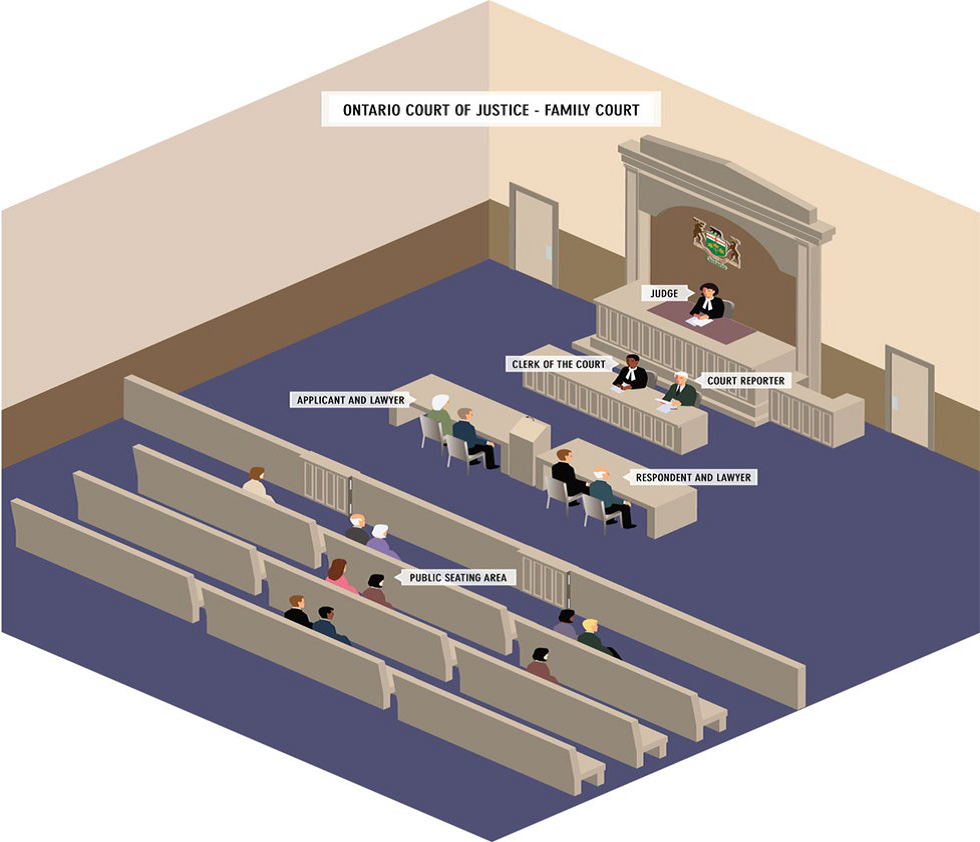
- The Application: The formal document that starts the case.
- The Case Conference: A meeting with a judge to explore settlement options and ensure financial disclosure is complete.
- Motions for Interim Relief: If you need immediate support or parenting orders before the final trial.
- Settlement Conference: A final attempt to settle before trial, where the judge provides an opinion on the likely outcome.
- The Trial: Where a judge hears evidence and makes a final, binding decision.
At IQBAL LAW, our trial lawyer is known for his meticulous preparation and aggressive advocacy. We leave no stone unturned in protecting our clients' rights.
Financial Disclosure: The Foundation of Every Case
In Ontario, you cannot have a valid legal settlement without Full and Frank Financial Disclosure. This includes:
- Three years of Income Tax Returns and Notices of Assessment.
- Recent pay stubs.
- Statements for all bank accounts, RRSPs, TFSAs, and pensions.
- Appraisals for real estate and business valuations.
- Details of all debts, including credit cards and lines of credit.
Hiding assets is a serious matter that can lead to "costs awards" (where you pay the other side's legal fees) or even the setting aside of a final agreement years later.
Frequently Asked Questions (FAQs) — Common Law Ontario
Protect Your Common Law Rights Today
Don't navigate the complexities of Ontario common law alone. With over 16 years of experience, Iqbal Law provides the strategic guidance you need to protect your future.
Schedule Your Consultation