
Navigating Divorce
in Toronto
Your Trusted Legal Partner
Expert divorce lawyers in Toronto at IQBAL LAW — serving the GTA with strategic advocacy and compassionate guidance through every stage of family law.
Call us now: 289-652-0529

Your Guide Through Challenging Times
Facing a divorce or separation is one of life's most challenging experiences — marked by emotional turmoil, significant life changes, and complex legal considerations.
In Toronto, navigating the intricacies of family law requires not just legal expertise but also a compassionate and understanding approach. At IQBAL LAW, we are dedicated to providing unparalleled legal guidance and support to individuals and families throughout Toronto and across Ontario, ensuring your rights are protected and your future is secured.
Our team of divorce lawyers is committed to helping you achieve a fair and equitable resolution, allowing you to move forward with confidence.
We understand that when you search for the best divorce lawyer in Toronto or the best divorce lawyer near me, you're looking for more than just legal representation — you're seeking a trusted advisor who can offer clarity, strategic counsel, and unwavering advocacy during a vulnerable time.
Book Your Consultation
Nasar Iqbal is a trusted family and divorce lawyer serving clients across Ontario, including the GTA, Mississauga, Hamilton, Newmarket, Oshawa, Barrie, Kitchener, Woodstock, Sarnia, and London. Fluent in English, Urdu, Punjabi, and Hindi.
Understanding Divorce and Separation in Ontario
In Ontario, divorce and separation are governed by a dual legal framework: the federal Divorce Act and the provincial Family Law Act. Understanding the distinctions between these two pieces of legislation is crucial for anyone undergoing a marital breakdown. Our top family lawyers at IQBAL LAW possess in-depth knowledge of both, ensuring every aspect of your case is handled with precision and care.
The Federal Divorce Act: Dissolving the Marriage
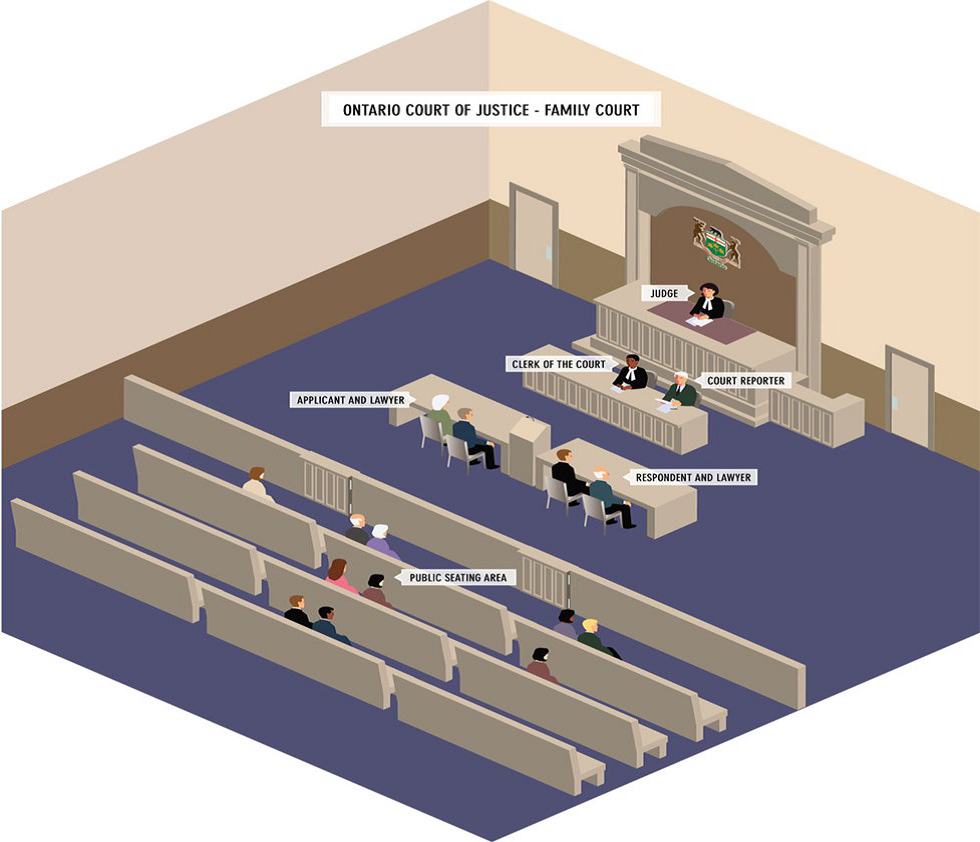
The Divorce Act is federal legislation that applies to married couples across Canada. Its primary purpose is to legally dissolve a marriage and address corollary issues such as child support and parenting orders. To obtain a divorce under the Divorce Act, one of three grounds must be established:
-
1
Separation for One Year — The most common ground. Spouses must have lived separate and apart for at least one year with the intent to end the marriage. Spouses can live under the same roof and still be considered separated if there is no reasonable prospect of reconciliation.
-
2
Adultery — One spouse has committed adultery.
-
3
Cruelty — One spouse has treated the other with physical or mental cruelty of such a kind as to render intolerable the continued cohabitation of the spouses.
The Provincial Family Law Act: Property, Support & Agreements
The Family Law Act (FLA) is provincial legislation that primarily governs financial matters arising from the breakdown of a marriage or common-law relationship in Ontario. This includes property division, spousal support, and the enforceability of domestic contracts such as marriage contracts, cohabitation agreements, and separation agreements.
Equalization of Net Family Property

One of the most significant provisions of the FLA for married couples is the concept of equalization of net family property. This principle aims to ensure that both spouses share equally in the wealth accumulated during the marriage. Each spouse determines their Net Family Property (NFP) by subtracting their debts and the value of assets owned at the date of marriage (excluding the matrimonial home) from the value of assets owned at the date of separation.
Our property division lawyer team at IQBAL LAW has extensive experience in meticulously calculating NFP and advocating for fair equalization outcomes, especially in cases involving complex assets, businesses, or high net worth individuals.
Spousal Support
Spousal support, often referred to as alimony, is financial assistance paid by one spouse to the other after separation or divorce. The purpose is to recognize economic advantages or disadvantages arising from the marriage or its breakdown, relieve economic hardship, and promote the self-sufficiency of the recipient spouse. The Spousal Support Advisory Guidelines (SSAG) are often used by courts and lawyers to determine the amount and duration of support. Our spousal support lawyers are adept at navigating these guidelines to ensure equitable arrangements.
Domestic Contracts: Protecting Your Future
Domestic contracts play a vital role in family law, allowing couples to define their rights and obligations during a relationship, upon separation, or in the event of death. It is crucial that both parties obtain Independent Legal Advice (ILA) before signing any domestic contract.
Marriage Contracts
Signed before or during marriage, these prenuptial agreements specify how property will be divided and whether spousal support will be paid in the event of separation or divorce.
Cohabitation Agreements
For common-law couples, these agreements address similar issues as marriage contracts, outlining rights and responsibilities during and after the relationship.
Separation Agreements
Comprehensive contracts negotiated after separation covering property division, child support, spousal support, and parenting arrangements — potentially avoiding court litigation.
Trusted Family Law Advocacy in Toronto
When searching for the best divorce lawyer in Toronto, you are looking for a firm that combines legal acumen with genuine empathy. IQBAL LAW embodies these qualities, offering a client-centered approach that prioritizes your well-being and future.
Unparalleled Experience & Expertise
Our divorce lawyers bring years of dedicated experience representing clients from straightforward uncontested divorces to highly complex, high-net-worth disputes involving intricate financial structures and international elements.
Client-Centered & Compassionate
We understand that every family and every divorce is unique. Our approach is tailored to your specific needs — we listen attentively, explain complex legal concepts clearly, and develop personalized strategies.
Strategic Negotiation & Litigation
While we always strive for amicable resolutions through negotiation and mediation, we are formidable litigators when court intervention becomes necessary.
Transparent Communication
We believe in transparent communication and clear billing practices. From your initial consultation, we provide a realistic assessment of your case, potential outcomes, and costs.
Affordable, Without Compromise
We offer various fee structures including flat fees for certain services, providing predictability and affordability — efficient solutions without compromising quality.
Local Toronto Expertise
As a Toronto-based firm, we possess an intimate understanding of the local legal landscape, including the procedures of the Toronto Superior Court of Justice and family courts throughout the GTA.

🎯 Serving Mississauga, Oakville & the GTA
→ Toronto Family Lawyer → Family Lawyer Mississauga → Family Lawyer Oakville → Family Lawyer Brampton → Family Lawyer Scarborough View all locations →
The Divorce Process in Ontario
Understanding the general steps involved in the divorce process can help alleviate some of the anxiety associated with it. While every case is unique, here is a typical overview of how a divorce proceeds in Ontario:
Initial Consultation and Legal Advice
The first crucial step is to consult with an experienced divorce lawyer. During this initial meeting, you will discuss your situation, understand your rights and obligations, and explore the available legal options.
Separation and Negotiation
Many couples choose to separate first, often for a period of one year, before formally filing for divorce. During this time, discussions occur regarding parenting arrangements, child support, spousal support, and property division.
Filing for Divorce
Once the grounds for divorce are met, an Application for Divorce is filed with the Superior Court of Justice. This outlines the details of the marriage, grounds for divorce, and any corollary relief sought.
Response and Financial Disclosure
Both parties are required to provide full and frank financial disclosure, exchanging detailed information about their income, assets, debts, and expenses. This transparency is essential for fair negotiations.
Case Management and Dispute Resolution
Alternative Dispute Resolution (ADR) methods like mediation and arbitration are often utilized at this stage to resolve disagreements outside of court.
Court Order or Settlement
If a settlement is reached, it is typically formalized in a comprehensive separation agreement, which can then be incorporated into a court order. If not, the case will proceed to trial.
Final Divorce Order
Once all corollary issues are resolved, the court grants the Divorce Order, legally dissolving the marriage. There is typically a 31-day waiting period before the order becomes final and absolute.


Key Areas of Family Law Where IQBAL LAW Can Help
Our expertise extends across the full spectrum of family law matters. Whatever your specific needs, IQBAL LAW has the knowledge and experience to assist you. We represent clients at all levels of Ontario courts and pursue every avenue — from negotiation to courtroom advocacy.
Explore our core practice areas below. Each links directly to detailed information on our website.
View All Services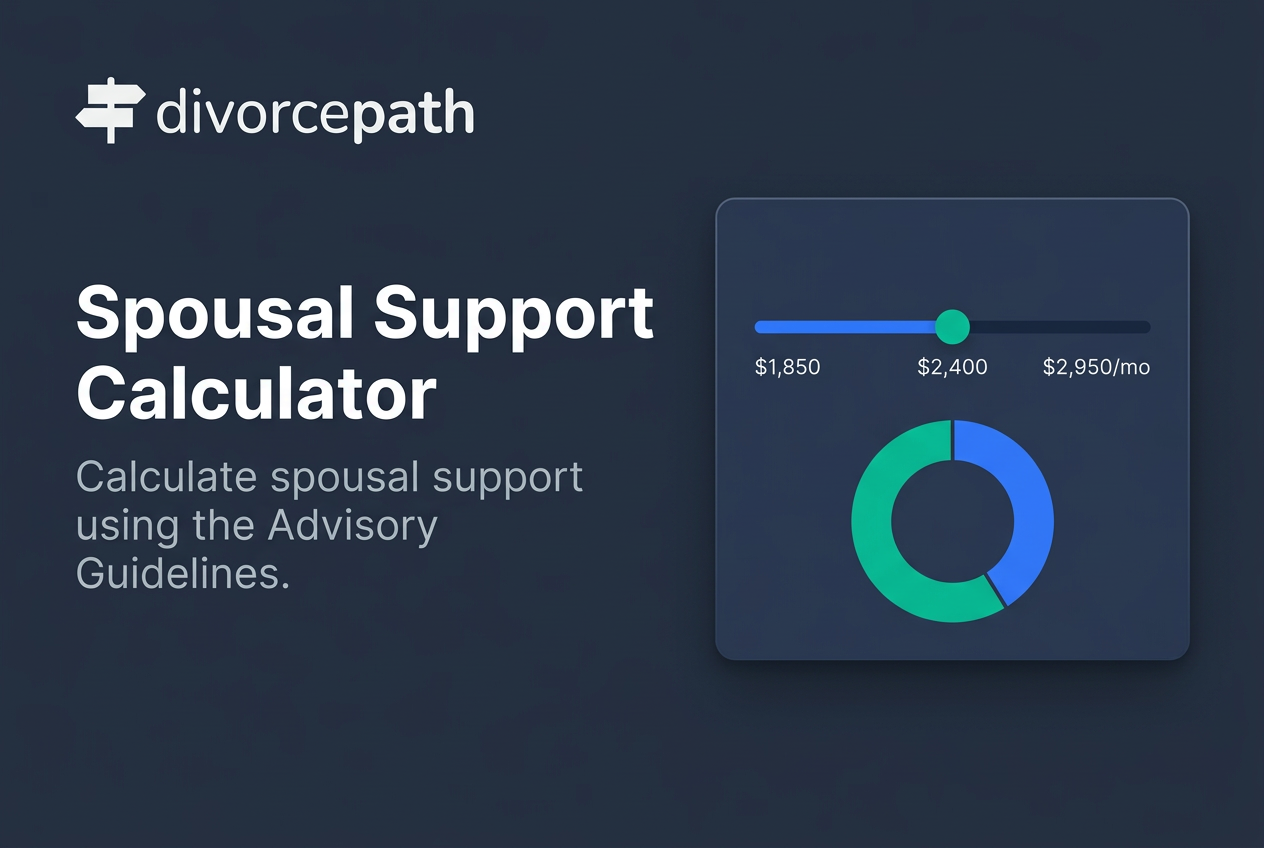
Child Support & Parenting Orders
- Child support calculations under the Federal Child Support Guidelines
- Special and extraordinary expenses (childcare, medical, education)
- Decision-making responsibility — education, healthcare, religion
- Parenting time schedules centred on children's best interests
- Relocation issues when one parent wishes to move
Spousal Support
- Entitlement determination based on economic hardship and roles
- Quantum and duration using the Spousal Support Advisory Guidelines
- Varying support orders due to significant changes in circumstances
- Negotiation and litigation for fair, sustainable outcomes
Property Division & Equalization
- Net Family Property (NFP) calculations at date of marriage and separation
- Matrimonial home rights and unique treatment under the FLA
- Complex assets: pensions, investments, stock options, businesses
- Hidden assets investigation and uncovering undisclosed property
- Fair allocation of marital debts
Domestic Contracts
- Marriage contracts — protecting assets before or during marriage
- Cohabitation agreements for common-law couples
- Separation agreements — comprehensive, enforceable coverage
- Independent Legal Advice (ILA) to ensure legal soundness
Alternative Dispute Resolution
- Mediation — neutral, structured dialogue to reach agreements
- Arbitration — private process with a neutral, binding decision
- Collaborative Family Law — cooperative, court-free resolution
- Cost-effective, time-efficient, less emotionally taxing processes
Child Custody & Access
- Uncontested divorce when both spouses agree on all issues
- Contested divorce representation at all Ontario court levels
- Emergency court orders for urgent child safety or asset preservation
- International divorces involving cross-border jurisdiction