
Introduction
Navigating the complexities of family separation and divorce can be one of life's most challenging experiences. Amidst emotional turmoil and significant life changes, making critical decisions about your future, your children, and your financial well-being can feel overwhelming. Fortunately, in Ontario, there are constructive and less adversarial pathways to resolution, with family mediation standing out as a highly effective approach. At Iqbal Law, we understand the profound impact these transitions have on individuals and families. Our commitment is to guide you through this process with empathy, expertise, and a focus on achieving fair, sustainable, and amicable outcomes. This comprehensive guide will delve into the nuances of family mediation in Ontario, exploring its benefits, process, costs, and how it compares to other dispute resolution methods like arbitration. Our goal is to empower you with the knowledge to make informed decisions, ensuring a smoother transition for you and your loved ones.
Understanding Family Mediation
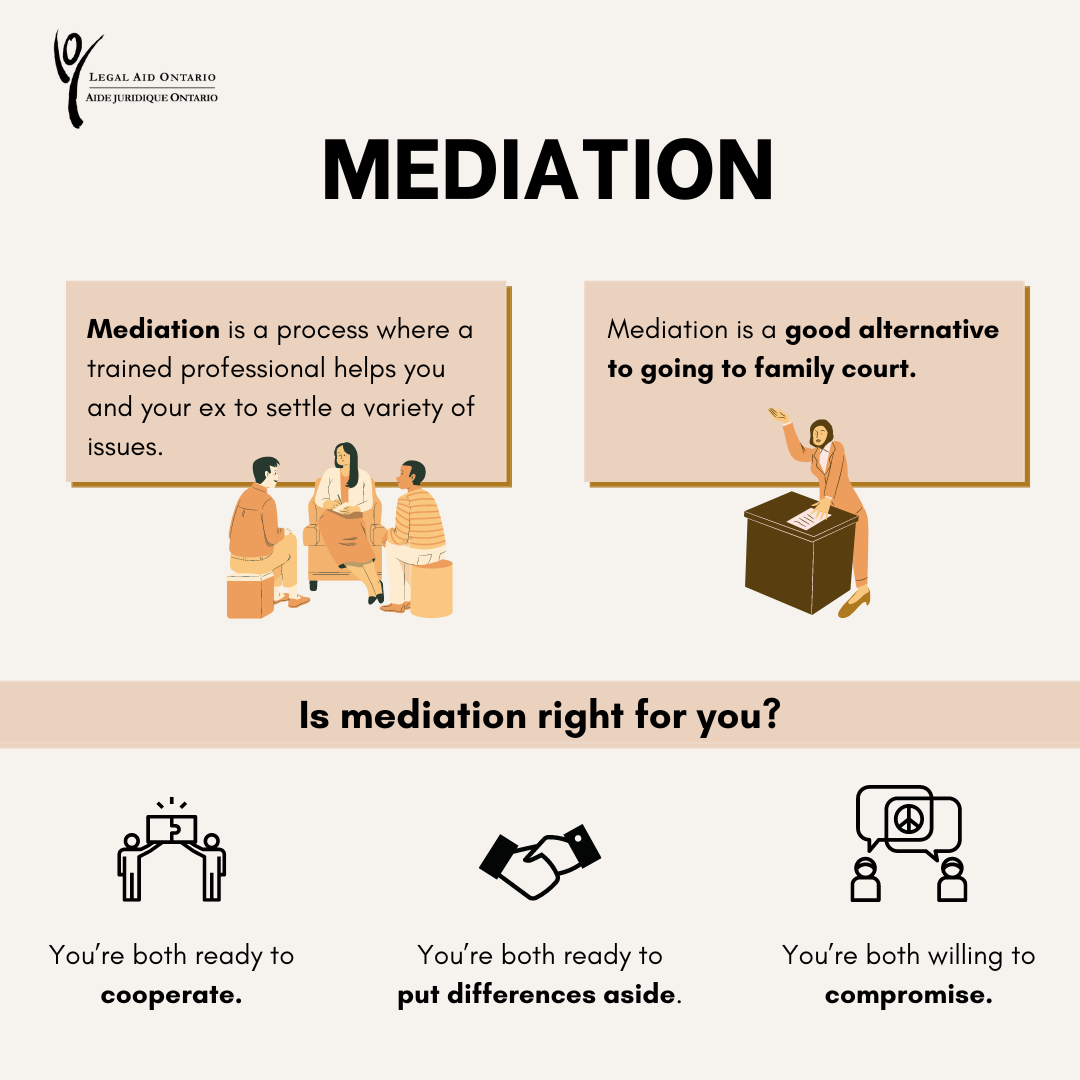
Family mediation is a voluntary, confidential process where a neutral third party, the mediator, assists separating or divorcing couples in reaching mutually acceptable agreements on various family law issues. These issues can include parenting arrangements (child custody and access), child support, spousal support, and the division of property. The mediator does not make decisions for the parties but facilitates communication, helps identify common ground, and explores creative solutions that meet the unique needs of the family.
What is Divorce Mediation?
Divorce mediation specifically addresses the legal and practical aspects of ending a marriage. It is a forward-looking process designed to help spouses transition from a marital relationship to a co-parenting or co-existing relationship with dignity and respect. Instead of engaging in adversarial court battles, divorce mediation encourages open dialogue and negotiation, allowing couples to retain control over the decisions that will shape their post-divorce lives. This approach often leads to more durable agreements, as they are crafted by the parties themselves rather than imposed by a judge.

Mediation vs. Arbitration: Understanding Your Options
When considering out-of-court dispute resolution, two terms frequently arise: mediation and arbitration. While both involve a neutral third party, their roles and the nature of the process differ significantly. Understanding these distinctions is crucial for choosing the right path for your family.
Mediation is a facilitative process where the mediator helps parties communicate and negotiate to reach their own agreement. The mediator has no authority to impose a decision. The outcome is entirely in the hands of the separating parties.
Arbitration, on the other hand, is a more formal, adjudicative process. An arbitrator, who is also a neutral third party, acts much like a private judge. After hearing evidence and arguments from both sides, the arbitrator makes a binding decision. This decision is legally enforceable, similar to a court order, and can only be appealed on very limited grounds.
| Feature | Mediation | Arbitration |
|---|---|---|
| Nature | Facilitative, consensual | Adjudicative, binding |
| Decision-Maker | Parties themselves | Neutral arbitrator |
| Outcome | Mutually agreed-upon settlement | Legally binding decision |
| Control | High control over outcome | Limited control over outcome |
| Confidentiality | Generally confidential | Generally confidential |
| Cost | Often less expensive than litigation | Can be more expensive than mediation, less than litigation |
| Formality | Informal, flexible | More formal, structured like a private trial |
While arbitration offers a definitive resolution, mediation is often preferred for its emphasis on preserving relationships, particularly when children are involved, and for allowing parties to craft creative solutions tailored to their specific circumstances. Many families opt for a hybrid approach, known as Med-Arb, where they first attempt mediation, and if an agreement cannot be reached on all issues, the mediator transitions into an arbitrator to make binding decisions on the unresolved matters.
The Role of Family Law Mediation
Family law mediation encompasses a broad range of issues beyond just divorce, including disputes between unmarried partners, grandparents seeking access to grandchildren, or parents needing to modify existing court orders. Its primary role is to provide a structured yet flexible environment for families to resolve conflicts outside the traditional court system. This approach is particularly beneficial in family matters where ongoing relationships are vital, such as co-parenting. By fostering cooperation rather than confrontation, family law mediation helps families build communication skills and create solutions that serve the best interests of all involved, especially children.
Separation Mediation: Navigating the Early Stages
For many couples, the journey begins with separation mediation. This process is designed to help individuals who have decided to separate, but not necessarily divorce, establish interim or long-term arrangements. It can address immediate concerns such as who will live where, temporary parenting schedules, and financial support during the separation period. Engaging in separation mediation early can prevent escalation of conflict, reduce stress, and lay a foundation for a more amicable future, whether that leads to reconciliation, a formal separation agreement, or divorce. It allows couples to proactively manage their transition, often before legal proceedings are initiated, saving time, money, and emotional strain.

The Mediation Process in Ontario
The family mediation process in Ontario is designed to be flexible and client-centered, adapting to the specific needs of each family. While the exact steps may vary depending on the mediator and the complexity of the issues, a general framework is typically followed to ensure a structured and productive dialogue.
Initial Contact and Intake
The process usually begins with one or both parties contacting a mediator. An intake session is conducted separately with each individual to explain the mediation process, assess suitability for mediation, discuss confidentiality, and screen for any power imbalances or history of family violence. This crucial step ensures that mediation is a safe and appropriate option for all involved.
Information Gathering and Disclosure
For mediation to be effective, both parties must have access to complete and accurate financial and other relevant information. Mediators will guide parties on what documents are needed, such as financial statements, income tax returns, and property valuations. Full and frank disclosure is a cornerstone of fair negotiations.
Mediation Sessions
Joint mediation sessions are where the core negotiations take place. The mediator facilitates discussions, helps parties articulate their interests and concerns, and explores various options for resolution. These sessions are typically conducted in a neutral and respectful environment, focusing on problem-solving rather than blame. The number of sessions required depends on the complexity of the issues and the parties' ability to reach agreements.
Reaching Agreements
As agreements are reached on specific issues, the mediator will often draft a summary of these understandings. Once all issues are resolved, the mediator prepares a comprehensive document outlining the agreements. This document can take several forms:
Open Statement of Understanding: A non-legally binding document summarizing the agreements reached.
Memorandum of Understanding (MOU): A more detailed document that outlines the terms of the agreement. While not legally binding on its own, it is intended to be reviewed by independent legal counsel and can form the basis of a separation agreement or consent order.
Independent Legal Advice (ILA)
It is strongly recommended, and often required by mediators, that both parties obtain Independent Legal Advice (ILA) before signing any formal agreement based on the mediation outcome. Lawyers can review the MOU, explain its legal implications, ensure fairness, and advise on any necessary adjustments. This step is vital to ensure the agreement is legally sound and enforceable. Learn more about our Independent Legal Advice services.
Formalizing the Agreement
After ILA, the agreements can be formalized into a legally binding Separation Agreement or presented to the court as a Consent Order. These legal documents ensure that the terms agreed upon in mediation are enforceable.
Mandatory Mediation in Ontario: What You Need to Know
The concept of mandatory mediation in Ontario can sometimes be a source of confusion, particularly in family law. It is important to clarify that, unlike some civil cases, mandatory mediation is generally not imposed in family law matters in the same way.
Historically, Ontario has had a Mandatory Mediation Program (OMMP) under Rules 24.1 and 75.1 of the Rules of Civil Procedure, which applied to certain civil actions and estates matters in designated regions. However, family law cases are typically excluded from this program, except for the issues to be addressed pursuant to subsection 5 (2) of the Family Law Act.
Instead, in family law, the emphasis is on encouraging and facilitating mediation rather than making it strictly mandatory. The courts strongly promote Alternative Dispute Resolution (ADR) methods, including mediation, as a primary means of resolving family disputes. While a judge cannot typically force parties into mediation against their will, they can order parties to attend an information session about mediation or to consider mediation as an option.
Furthermore, for parents with dependent children, there is a provision for five hours of free mediation to help them reach an agreement before appearing before a judge. This initiative underscores the province's commitment to supporting families in resolving conflicts amicably and outside of court. The goal is to empower families to make their own decisions, reduce court backlogs, and minimize the emotional and financial strain associated with litigation.
It is crucial for individuals involved in family law disputes to understand that while direct mandatory participation in mediation may not be the norm, the courts and the legal system in Ontario actively promote and expect parties to explore mediation as a viable first step towards resolution. Engaging in mediation demonstrates a good faith effort to resolve issues cooperatively, which can be viewed favorably by the court should litigation become necessary.
How Much Does Mediation Cost in Ontario?
One of the primary concerns for individuals considering family mediation is the cost. The cost of family mediation in Ontario can vary significantly depending on several factors, including the mediator's experience, the complexity of the issues, the number of sessions required, and whether the mediation is private or subsidized. Generally, mediation is a more cost-effective solution compared to traditional litigation, which can quickly accumulate substantial legal fees.
Private Mediation
Private mediators in Ontario typically charge an hourly rate. The total cost for the entire divorce mediation process, including all sessions and drafting of a Memorandum of Understanding, can range from $2,500 to $5,000. This cost is usually split between the parties, making it significantly less expensive than going to court.
Subsidized Mediation
The Ontario government offers subsidized mediation services on a sliding scale based on income and number of dependents. Legal Aid Ontario (LAO) also provides access to mediation services for eligible individuals, ensuring financial constraints do not prevent access to this beneficial dispute resolution method.
It is important to inquire about the fee structure during the initial intake session with a mediator. Many mediators offer a free initial consultation to discuss their services and fees. While the upfront cost of mediation may seem like an expense, it is an investment that can save significant time, money, and emotional distress in the long run by avoiding protracted court battles.
Choosing a Mediation Lawyer Near You
Selecting the right mediation lawyer or family mediator is a critical step towards a successful resolution. While mediators are neutral third parties, having a lawyer who understands the mediation process and can provide independent legal advice throughout is invaluable. When searching for a "mediation lawyer near me" in Ontario, consider the following factors:
Experience and Qualifications
Look for mediators with extensive experience in family law and specific training in family mediation. Accreditation with organizations like the Ontario Association for Family Mediation (OAFM) is a strong indicator of expertise.
Approach and Style
Mediators have different styles. Some are more facilitative, focusing on guiding conversation, while others may be more evaluative. Find a mediator whose approach aligns with your needs.
Specialization
If your case involves complex financial matters, unique parenting challenges, or cross-border issues, seek a mediator with specialized knowledge in those areas.
Reputation and References
Look for testimonials, reviews, or ask for references to gauge the mediator's effectiveness and professionalism.
Cost Structure
Understand their fee schedule and whether they offer subsidized options if applicable.
Location and Accessibility
While many mediations can now be conducted virtually, proximity to a mediator's office might still be a consideration for in-person meetings.
For instance, our principal lawyer, Nasar Iqbal, has completed the Family Mediation Training from York University, Toronto, and is on the path to becoming an accredited mediator with OAFM, demonstrating a deep commitment to this specialized field.
Choosing a qualified and compassionate mediator can significantly impact the success of your mediation. A skilled mediator can help transform conflict into constructive dialogue, leading to mutually beneficial agreements.
Why Choose Iqbal Law for Family Mediation?
At Iqbal Law, we are dedicated to providing exceptional family mediation services that prioritize your family's well-being and future. Our approach is rooted in empathy, legal expertise, and a steadfast commitment to achieving fair and lasting resolutions. We understand that every family's situation is unique, and we tailor our mediation process to meet your specific needs, ensuring a supportive and productive environment.
Meet Nasar Iqbal: Your Trusted Mediator
Nasar Iqbal, the principal lawyer at Iqbal Law, brings a wealth of knowledge and a compassionate approach to family mediation. With a strong foundation in family law, Nasar has further honed his skills by completing the comprehensive Family Mediation Training from York University, Toronto. This rigorous program has equipped him with advanced techniques and a deep understanding of the dynamics involved in family disputes. Nasar is actively pursuing accreditation with the Ontario Association for Family Mediation (OAFM), a testament to his dedication to upholding the highest standards of professional practice in mediation. His commitment to continuous learning and adherence to ethical guidelines ensures that clients receive expert guidance throughout their mediation journey. Nasar's goal is to empower you to make informed decisions, fostering communication and cooperation to build a stable foundation for your family's future.

Benefits of Family Mediation
Family mediation offers a multitude of advantages over traditional litigation, making it an increasingly preferred method for resolving family disputes in Ontario. These benefits extend beyond just cost savings and often lead to more positive long-term outcomes for all parties involved, especially children.
Cost-Effectiveness
As previously discussed, mediation is generally significantly less expensive than going to court. By avoiding lengthy legal battles, families can save substantial financial resources that can then be reallocated to their future needs.
Time Efficiency
The court system can be slow and backlogged, often leading to prolonged periods of uncertainty and stress. Mediation typically proceeds at a much faster pace, allowing families to reach agreements and move forward with their lives more quickly.
Confidentiality and Privacy
Unlike court proceedings, which are generally public, mediation sessions are confidential. This privacy allows parties to discuss sensitive issues openly and honestly without fear of public disclosure, preserving dignity and personal information.
Control Over Outcomes
In mediation, the parties retain control over the decisions that affect their lives. Instead of a judge imposing a decision, you and your former partner work together to craft solutions that are tailored to your family's unique circumstances. This ownership often leads to more durable and satisfying agreements.
Preservation of Relationships
Mediation fosters communication and cooperation, which can help preserve a more amicable relationship between separating parents. This is particularly vital when children are involved, as it facilitates effective co-parenting and reduces conflict, benefiting the children's emotional well-being.
Flexibility and Customization
Mediation is a flexible process that can be adapted to the specific needs of the family. Agreements can be highly customized to address unique situations, whereas court orders can be more rigid and standardized.
Reduced Stress and Emotional Strain
The adversarial nature of litigation can be incredibly stressful and emotionally draining. Mediation provides a more supportive and less confrontational environment, reducing the emotional toll on all family members.
Focus on Children's Best Interests
A core principle of family law in Ontario is the best interests of the child. Mediation inherently encourages parents to focus on their children's needs and to create parenting plans that prioritize their well-being, rather than engaging in disputes that can harm them.
Improved Communication Skills
The mediation process often helps parties develop better communication and negotiation skills, which can be beneficial for future interactions, especially in co-parenting relationships.
By choosing family mediation, you are opting for a constructive, respectful, and empowering approach to resolving your family law matters, paving the way for a more peaceful and stable future.
Conclusion
Family mediation in Ontario offers a compassionate, efficient, and empowering alternative to traditional court litigation for resolving family law disputes. By fostering open communication, preserving relationships, and empowering parties to craft their own solutions, mediation paves the way for more amicable and sustainable outcomes. At Iqbal Law, we are committed to guiding you through this process with unparalleled expertise and support. With our principal lawyer, Nasar Iqbal, bringing his specialized training from York University and his pursuit of OAFM accreditation, you can trust that you are in capable hands. Choose Iqbal Law to navigate your family law matters with dignity, respect, and a focus on a brighter future for you and your loved ones. Contact us today to learn how family mediation can benefit your unique situation.
Frequently Asked Questions (FAQs)
To further assist you in understanding family mediation, here are answers to some of the most commonly asked questions:
A: The agreements reached during mediation are not legally binding until they are formalized into a Separation Agreement or a Consent Order by a court. However, a Memorandum of Understanding (MOU) drafted by the mediator outlines the agreements and is intended to be the basis for these legal documents. It is highly recommended to seek Independent Legal Advice (ILA) before signing any formal agreement.
A: While you do not need a lawyer present during the mediation sessions themselves (unless you choose to have one), it is strongly advised to obtain Independent Legal Advice (ILA) from your own lawyer before and after the mediation process. Your lawyer can advise you on your legal rights and obligations, review any proposed agreements, and ensure that your interests are protected.
A: It's common for parties not to agree on every single issue. A skilled mediator will help you explore options and find common ground. If some issues remain unresolved, you have several options: you can continue mediation on those specific issues, pursue Med-Arb (where the mediator becomes an arbitrator for unresolved issues), or proceed to court for a judge to decide on the remaining points. Even partial agreements reached in mediation can significantly narrow the scope of court proceedings.
A: The mediator will conduct a thorough screening for domestic violence and power imbalances during the intake process. If there is a history of domestic violence, mediation may not be appropriate or safe. However, in some cases, with specific safety protocols in place (e.g., shuttle mediation where parties are in separate rooms), mediation might still be considered. The safety and well-being of all parties are paramount.
A: The duration of family mediation varies greatly depending on the complexity of the issues, the willingness of the parties to cooperate, and the number of issues to be resolved. Simple cases might be resolved in a few sessions over a few weeks, while more complex matters could take several months. It is almost always faster than going to court.
A: A mediator facilitates communication and helps parties reach their own agreement, but does not make decisions for them. An arbitrator, on the other hand, acts like a private judge, hears evidence, and makes a legally binding decision on the issues presented. Mediation is consensual, while arbitration results in an imposed decision.
A: Yes, family mediation is highly effective for resolving parenting arrangements, including child custody (now referred to as decision-making responsibility) and access (now referred to as parenting time). Mediators help parents create comprehensive parenting plans that focus on the children's best interests, addressing schedules, holidays, communication, and other important aspects of co-parenting.
A: In Ontario, family mediators who provide court-connected services must meet specific minimum qualifications, including extensive training in family mediation and dispute resolution. Many professional mediators also seek accreditation from organizations like the Ontario Association for Family Mediation (OAFM), which signifies adherence to high professional and ethical standards. Nasar Iqbal, for example, has completed his Family Mediation Training from York University and is pursuing OAFM accreditation.
A: Yes, mediation can be pursued at any stage of a family law dispute, even if court proceedings have already begun. Many couples choose to pause court proceedings to attempt mediation, as it can still help resolve some or all issues, thereby streamlining the court process or avoiding it altogether.
A: A Separation Agreement is a legally binding contract between spouses who have separated, outlining their agreements on issues such as parenting arrangements, child support, spousal support, and division of property. It is typically drafted by lawyers based on the terms agreed upon in mediation or negotiation. Once signed and witnessed, it is a powerful legal document.