Understanding Separation Agreements in Ontario
Introduction
Table of Contents
- What Is a Separation Agreement?
- The Legal Requirements for a Valid Agreement
- Parenting Arrangements and Decision-Making
- Child Support Obligations
- Spousal Support Considerations
- Property Division and the Matrimonial Home
- Enforcement and Dispute Resolution Mechanisms
- Separation Versus Divorce: Understanding the Distinction
- The Role of Legal Professionals
- Common Mistakes to Avoid
- Frequently Asked Questions
- Conclusion
What Is a Separation Agreement?
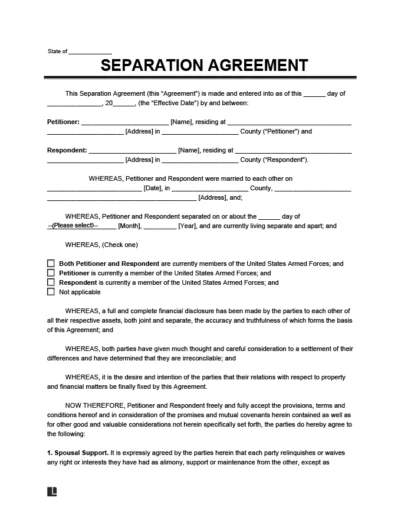
Separation Agreement Template Document
A separation agreement is a legally binding domestic contract between two spouses or common-law partners who have decided to live separate and apart. In Ontario, these agreements are governed by Section 54 of the Family Law Act and must be in writing, signed by both parties, and witnessed to be valid . The agreement covers virtually all issues arising from the breakdown of the relationship, including parenting arrangements, financial support, and property division. Importantly, a separation agreement does not end the marriage itself. For married couples, only a divorce order issued by a court can dissolve the marital bond. Nevertheless, many couples choose to remain separated indefinitely without ever pursuing divorce, particularly if religious, financial, or personal reasons make divorce undesirable. For common-law partners, a separation agreement serves a similar function, though the legal framework differs slightly since common-law relationships do not require a formal divorce process. The primary purpose of this document is to provide clarity and prevent future disputes. By setting out each party's rights and obligations in black and white, the agreement reduces ambiguity and establishes predictable expectations. Furthermore, a well-drafted separation agreement can expedite the divorce process later, as courts generally respect properly executed agreements when issuing divorce orders.
The Legal Requirements for a Valid Agreement

Professional Signing Legal Document
For a separation agreement to hold up in an Ontario court, it must satisfy several strict legal requirements. First and foremost, the agreement must be in writing. Oral agreements, while potentially persuasive in some contexts, do not qualify as separation agreements under Ontario law . Both parties must sign the document, and each signature requires a witness. These formalities ensure that the agreement reflects a genuine meeting of the minds rather than a unilateral declaration. Beyond procedural requirements, the substance of the agreement matters enormously. Ontario courts will scrutinize whether both parties provided full and frank financial disclosure before signing. Under Section 56(4) of the Family Law Act, a court may set aside an agreement if one party failed to disclose significant assets or debts, or if the agreement was signed under duress or undue influence . This means hiding assets, understating income, or pressuring a vulnerable partner can render the entire agreement void. Additionally, both parties must have had the opportunity to obtain independent legal advice. While not strictly mandatory, the absence of independent legal advice significantly weakens an agreement's defensibility. Courts view independent legal advice as a safeguard against exploitation, particularly in situations where one party holds substantially more power, knowledge, or resources than the other. Therefore, skipping this step to save money often proves penny-wise but pound-foolish. Finally, the terms themselves must be fair and reasonable at the time of execution. An agreement that leaves one party destitute while the other retains all assets will likely face judicial intervention. Although parties enjoy considerable freedom to negotiate their own arrangements, Ontario law imposes limits when the outcome shocks the conscience or violates public policy.
Parenting Arrangements and Decision-Making

Co-parenting and Child Custody Arrangement
When children are involved, a separation agreement must address their care with meticulous attention. Ontario law has moved away from traditional "custody" and "access" terminology toward a more child-centered framework. Under the Children's Law Reform Act and the federal Divorce Act, the focus now rests on decision-making responsibility and parenting time . This linguistic shift reflects a broader legal philosophy: children benefit when parents cooperate rather than compete for ownership rights. Decision-making responsibility determines who makes major choices about the child's welfare, including education, non-emergency healthcare, religion, and significant extracurricular activities. Parents may share this responsibility jointly, or one parent may hold sole authority. The agreement should specify not only who decides what but also how disputes will be resolved when parents disagree. For instance, some agreements designate a particular parent as the tie-breaker for specific categories of decisions. Parenting time refers to the actual schedule governing when the child resides with each parent. A robust agreement goes beyond a basic weekly rotation to address holidays, school breaks, birthdays, and special occasions like Mother's Day or Father's Day . Moreover, it should include protocols for travel, particularly international travel, which may require consent letters and passport arrangements. Communication protocols also deserve attention; many agreements now specify that parents must use email or specialized co-parenting apps to discuss child-related matters, thereby reducing conflict and creating a written record.
Child Support Obligations
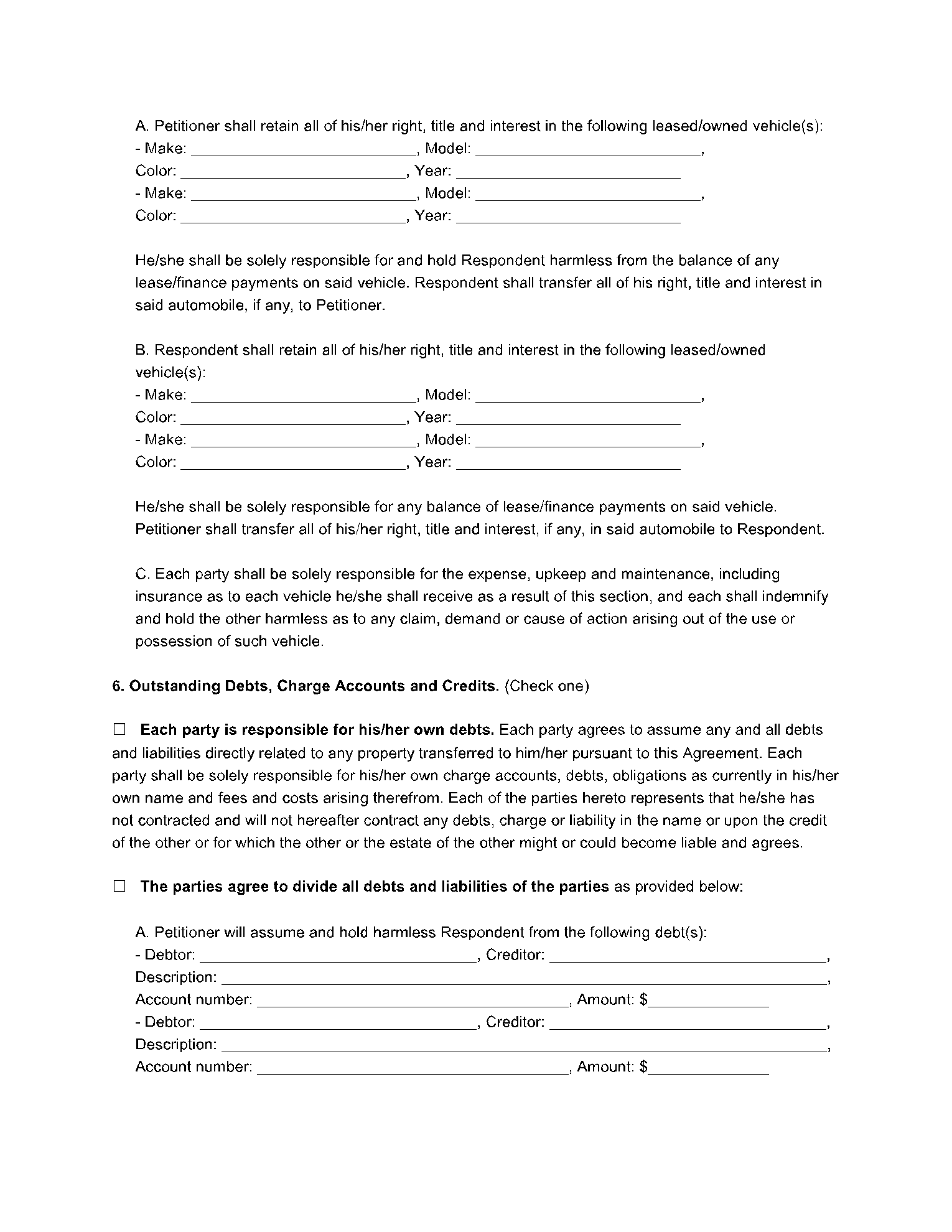
Separation Agreement Financial Provisions
Child support represents one of the most heavily regulated aspects of separation agreements in Ontario. Unlike spousal support, parents cannot simply contract out of child support obligations if the result would leave the child inadequately provided for. The law treats child support as the right of the child, not a bargaining chip between parents . The foundation of child support lies in the Federal Child Support Guidelines, which establish a "table amount" based on the payor parent's gross annual income and the number of children requiring support . This table amount covers basic necessities such as food, clothing, and shelter. However, additional expenses—known as Section 7 expenses—require separate consideration. These special and extraordinary costs include childcare, unreimbursed medical and dental premiums, private schooling (when justified), and extracurricular activities meeting the "extraordinary" threshold . Parents typically share Section 7 expenses in proportion to their respective incomes. Consequently, the agreement must include mechanisms for annual financial disclosure, usually through the exchange of income tax returns and Notices of Assessment . This transparency allows support amounts to adjust automatically when incomes change, preventing the need for constant renegotiation. Furthermore, the agreement should specify when child support terminates—whether upon the child reaching adulthood, completing post-secondary education, or achieving financial independence—since support does not automatically end when a child turns eighteen .
Spousal Support Considerations
Spousal support differs fundamentally from child support in that it is not automatic. Before any amount or duration can be determined, the claimant must first establish entitlement based on one of three grounds: compensatory, non-compensatory, or contractual . Compensatory support recognizes economic sacrifices made during the marriage, such as leaving the workforce to raise children. Non-compensatory support addresses genuine financial need arising from the relationship's breakdown. Contractual support arises when parties have previously agreed to support terms, such as in a marriage contract. Once entitlement is established, the Spousal Support Advisory Guidelines (SSAG) provide a range for both the amount and duration of payments . However, these guidelines are advisory rather than mandatory, and courts retain discretion to deviate based on the specific circumstances. A separation agreement should clearly articulate whether support is waived, paid periodically, or settled through a lump-sum payment. Each option carries distinct tax implications; periodic payments are generally taxable to the recipient and deductible for the payor, whereas lump-sum payments typically receive different tax treatment . The agreement must also address termination triggers. Common triggers include the recipient's remarriage, cohabitation with a new partner, the payor's retirement, or the expiration of a fixed term. Because spousal support disputes frequently lead to litigation, precise drafting at the outset can save both parties significant legal fees and emotional distress down the road.
Property Division and the Matrimonial Home

Property Division and Matrimonial Home
Property division in Ontario follows the equalization of net family property (NFP) regime. Each spouse calculates their net worth at the date of marriage and the date of separation; the difference represents the wealth accumulated during the marriage. The spouse with the higher NFP must pay the other an equalization payment to ensure both share equally in the marital economic partnership . The matrimonial home occupies a unique position in Ontario law. Unlike other assets brought into the marriage, the full value of the matrimonial home is included in the equalization calculation, regardless of who owned it before marriage or who contributed to the purchase . This special status reflects the home's emotional and practical significance as the family's primary residence. A separation agreement must address the home's future through one of several pathways. First, one spouse may buy out the other's interest, requiring a professional appraisal and refinancing to remove the departing spouse from the mortgage . Second, the parties may agree to sell the home to a third party and divide the net proceeds after paying the mortgage, real estate commissions, and legal fees. Third, a deferred sale allows one spouse to remain in the home temporarily—often until children finish school—before selling and dividing proceeds later . Beyond the matrimonial home, the agreement should inventory all assets and debts, including bank accounts, investments, pensions, RRSPs, vehicles, and liabilities. Full transparency prevents future claims of concealed assets and ensures the equalization calculation withstands judicial scrutiny.
Enforcement and Dispute Resolution Mechanisms

Mediation and Dispute Resolution
Even the most comprehensive separation agreement risks becoming worthless without effective enforcement mechanisms. Ontario provides several tools to ensure compliance. The Family Responsibility Office (FRO) serves as a government agency that collects, distributes, and enforces support payments . Parties may file their agreement with the FRO, which then possesses the authority to garnish wages, suspend driver's licenses, and take other enforcement actions against defaulting payors. Alternatively, parties may handle payments privately, though this option offers less protection if disputes arise. To prevent disputes from escalating to court, many agreements include mediation-arbitration clauses. These provisions require parties to attempt resolution through a neutral mediator before seeking judicial intervention . Mediation offers a confidential, cost-effective alternative to litigation, while arbitration provides a binding decision if mediation fails. Including such clauses demonstrates foresight and a commitment to preserving amicable relations. Default clauses also merit inclusion. These provisions specify consequences when a party fails to meet obligations, such as failing to sell the home by an agreed date or missing support payments. Clear consequences eliminate ambiguity and provide a roadmap for enforcement, reducing the likelihood of protracted legal battles over procedural matters.
Separation Versus Divorce: Understanding the Distinction
Many Ontarians conflate separation with divorce, yet the two concepts differ legally and practically. Separation requires no court filing; it occurs when spouses begin living separate and apart with the intention of ending their relationship . Couples may even separate while continuing to reside under the same roof, provided they maintain separate lives. The crucial element is the intention to live apart, not physical distance. Divorce, by contrast, formally terminates the marriage and requires a court order. Under the Divorce Act, married couples must live separately for at least one year before becoming eligible for divorce, though exceptions exist for adultery or cruelty . A separation agreement can be executed immediately upon separation, whereas divorce remains unavailable until the one-year waiting period expires. This distinction carries practical implications. Separated spouses retain certain legal rights and obligations associated with marriage, such as inheritance rights under a will or the ability to remain on a spouse's health insurance plan. Divorce extinguishes these rights. Consequently, some couples choose indefinite separation over divorce for financial, religious, or personal reasons. Regardless of the path chosen, a separation agreement remains essential for clarifying rights and responsibilities during the interim period.
The Role of Legal Professionals
Navigating a separation agreement without professional guidance resembles performing surgery on yourself—technically possible but profoundly unwise. Ontario family lawyers bring specialized knowledge of statutory requirements, judicial precedents, and negotiation strategies that dramatically improve outcomes. They ensure full financial disclosure, identify hidden assets, and draft language precise enough to withstand future challenges. Moreover, lawyers provide the independent legal advice that courts view as a hallmark of fair agreements. When both parties consult separate counsel, the resulting agreement carries a presumption of validity that self-drafted documents lack. While legal fees may seem daunting, the cost of rectifying a poorly drafted agreement—or worse, litigating its validity—far exceeds the investment in competent representation from the outset. Mediators and collaborative family law practitioners offer alternative pathways for couples seeking amicable resolutions. These professionals facilitate negotiations without the adversarial posture of traditional litigation. However, even in mediated agreements, each party should still obtain independent legal advice before signing. The mediator remains neutral and cannot advocate for either party's interests.
Common Mistakes to Avoid
Careful Document Review Avoiding Mistakes
Despite good intentions, many couples stumble into preventable pitfalls when drafting separation agreements. One frequent error involves inadequate financial disclosure. Failing to disclose all assets, debts, or income sources creates a Sword of Damocles hanging over the agreement, as the non-disclosing party risks judicial setting aside of the entire contract . Full transparency, however uncomfortable, remains non-negotiable. Another mistake involves vague or ambiguous language. Phrases like "reasonable access" or "fair share of expenses" invite interpretation disputes that necessitate court intervention. Effective agreements define terms precisely, specify dollar amounts where possible, and establish clear protocols for handling foreseeable contingencies. Third, some couples rush the process under emotional pressure or financial strain. Hasty agreements often overlook critical issues such as tax implications, pension division, or future educational expenses for children. Taking time to consider long-term consequences, even when painful, yields more durable and equitable outcomes. Finally, failing to update the agreement when circumstances change represents a common oversight. While the original agreement governs unless modified, significant changes in income, health, or living arrangements may warrant formal amendments. Including variation clauses in the original agreement streamlines this process and prevents disputes about whether changes are permissible.
Frequently Asked Questions
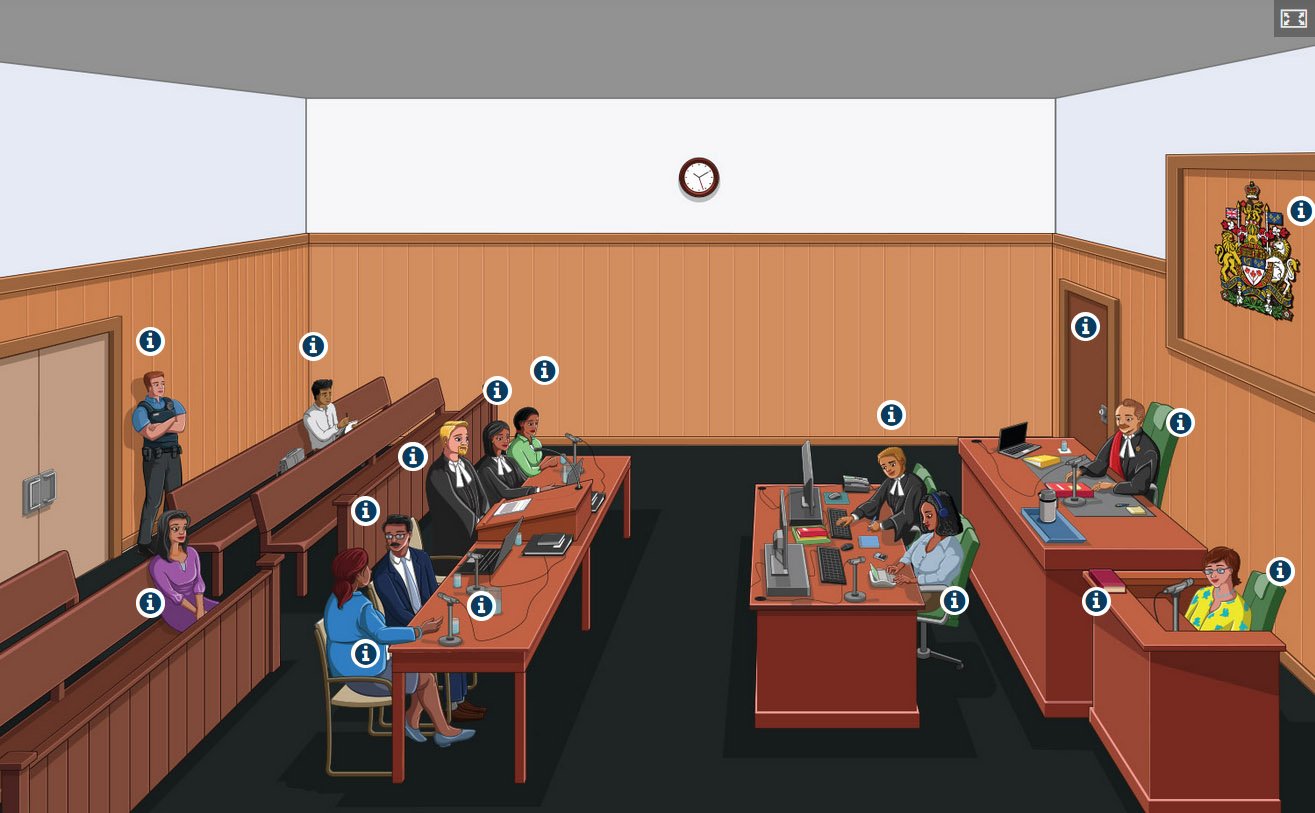
Ontario Family Court Interior
1. Is a separation agreement legally binding in Ontario?
Yes, provided it meets the requirements of Section 54 of the Family Law Act: it must be in writing, signed by both parties, and witnessed. However, courts may set aside agreements that result from inadequate disclosure, duress, or unfair terms
2. Do I need a lawyer to create a separation agreement?
While not strictly required, obtaining independent legal advice significantly strengthens the agreement's enforceability. Courts view lawyer involvement as evidence that both parties understood their rights and obligations before signing
3. How is child support calculated in Ontario?
Child support follows the Federal Child Support Guidelines, using the payor's gross annual income and the number of children. Additionally, parents must share Section 7 special and extraordinary expenses proportionally based on income
4. Can we use the same lawyer for our separation agreement?
No. Each party should retain separate counsel to ensure independent advice. A single lawyer representing both parties creates a conflict of interest and undermines the agreement's validity.
5. What happens if my ex-spouse hides assets during negotiations?
If significant assets are concealed, the non-disclosing party risks having the entire agreement set aside under Section 56(4) of the Family Law Act. Full and frank disclosure is mandatory and cannot be contractually waived
6. Does a separation agreement mean we are divorced?
No. A separation agreement addresses practical matters but does not dissolve the marriage. Only a court-issued divorce order can terminate a marriage in Ontario
7. How long does a separation agreement last?
The agreement remains in effect indefinitely unless modified by mutual consent or court order. Some provisions, such as child support, may have built-in termination triggers, while others continue until explicitly changed
8. Can we modify our separation agreement after signing?
Yes, but modifications must be in writing, signed, and witnessed, just like the original agreement. Oral modifications are not enforceable as separation agreements under Ontario law
9. What is the difference between decision-making responsibility and parenting time?
Decision-making responsibility governs major choices about the child's welfare, while parenting time refers to the actual schedule of when the child resides with each parent. Ontario law uses these terms instead of the older "custody" and "access" framework
10. Should we include a mediation clause in our agreement?
Absolutely. Mediation-arbitration clauses provide a cost-effective, private mechanism for resolving future disputes without returning to court. They demonstrate foresight and a commitment to cooperative problem-solving
Conclusion
A separation agreement represents far more than a mere legal formality; it serves as the foundation upon which former partners rebuild their lives. In Ontario, where family law balances individual autonomy with protections against exploitation, understanding the nuances of these agreements is indispensable. From parenting arrangements that prioritize children's wellbeing to financial provisions that ensure fairness, every clause carries weight and consequence. The path through separation is rarely easy, but a well-crafted agreement transforms chaos into clarity. By embracing full disclosure, seeking independent legal advice, and drafting precise terms, couples can create durable contracts that withstand the test of time. Whether your separation leads eventually to divorce or remains a permanent arrangement, the agreement you sign today will shape your tomorrows for years to come. Invest the time, resources, and care necessary to get it right—and you will emerge from this transition with your rights protected and your future secured.