Parental Alienation: The Silent Crisis Tearing Families Apart
Parental Alienation: The Silent Crisis Tearing Families Apart
Table of Contents
- Introduction: When Love Becomes a Weapon
- Understanding Parental Alienation: Definitions and Mechanisms
- Recognizing the Warning Signs: When Alienation Takes Root
- The Psychological Impact: A Cascade of Losses
- The Targeted Parent's Experience: A Unique Form of Grief
- The Legal Landscape: Proving Alienation in Court
- Pathways to Healing: Treatment and Reunification
- Frequently Asked Questions
- Conclusion: Breaking the Silence, Healing the Wounds
Introduction: When Love Becomes a Weapon

The devastating impact of family separation on children and parents alike.
Parental alienation represents one of the most devastating yet underrecognized crises in modern family dynamics. It occurs when one parent systematically manipulates a child into rejecting, fearing, or hating the other parent—often during or after a bitter divorce or separation. While debated in legal and psychological circles for decades, its real-world consequences are anything but abstract. Children caught in the crossfire suffer profound emotional wounds that persist into adulthood, while targeted parents experience a unique form of grief: the loss of a relationship with a child who is still alive yet emotionally unreachable.
In the United States alone, approximately 35.5% of parents perceive themselves as victims of alienating behaviors, with similar statistics in Canada at around 32%. These figures translate to millions of families grappling with psychological abuse that leaves no visible scars yet inflicts damage lasting a lifetime. Unlike other forms of family conflict, parental alienation operates in the shadows—hidden behind closed doors, masked by the plausible deniability of "the child's choice," and often dismissed by courts struggling to distinguish genuine alienation from legitimate estrangement.
This article examines the mechanisms, warning signs, psychological impact, legal landscape, and pathways to healing for affected families. By understanding this phenomenon in depth, we can begin to protect the most vulnerable victims: the children who never asked to become pawns in an adult war.
Back to TopUnderstanding Parental Alienation: Definitions and Mechanisms
What Is Parental Alienation?
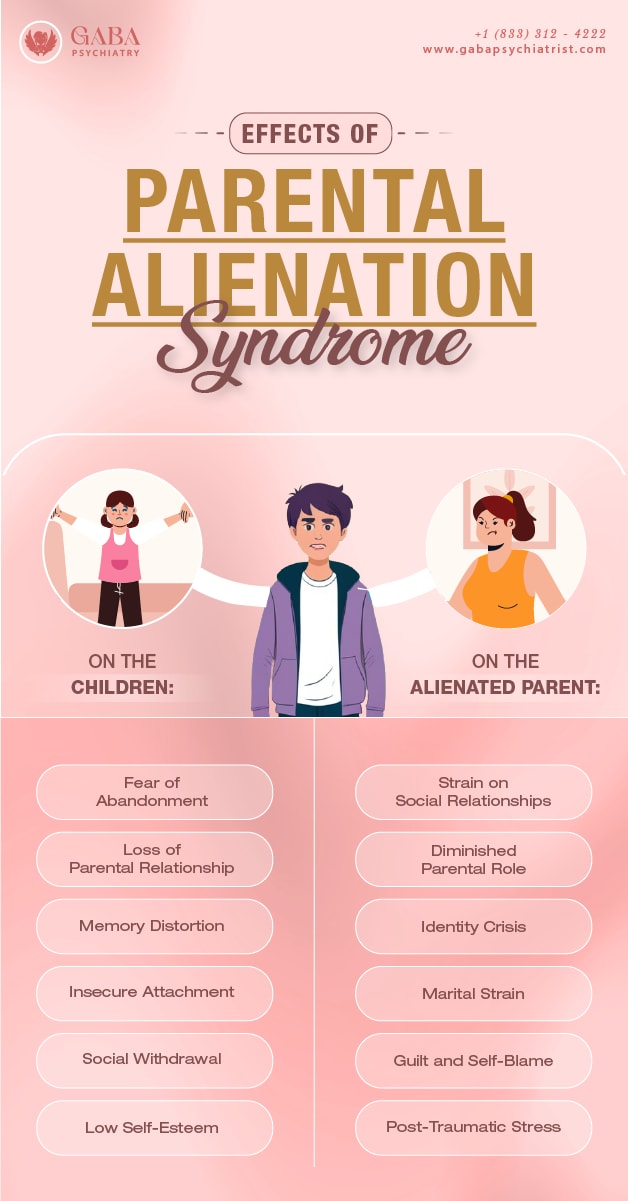
The wide-ranging effects of parental alienation on both children and alienated parents.
Parental alienation occurs when one parent—the alienating parent—engages in a deliberate campaign to damage the child's relationship with the other parent (the targeted or alienated parent). This is not about a child naturally drifting away due to abuse, neglect, or genuine conflict. Instead, it involves systematic indoctrination, manipulation, and emotional coercion designed to rewrite the child's perception of reality.
The term "Parental Alienation Syndrome" (PAS) was first introduced by psychiatrist Richard Gardner in the 1980s. However, PAS is not currently recognized as a formal diagnosis in major psychiatric manuals such as the DSM-5 or ICD. Contemporary perspectives increasingly view parental alienation not as a syndrome within the child, but rather as a relational and systemic issue involving the behaviors of the alienating parent, the vulnerabilities of the child, and the responses of the targeted parent. While the diagnostic label may be contested, the reality of parental alienation as a destructive dynamic is widely acknowledged among family law professionals and mental health practitioners.
The Mechanisms of Manipulation
The alienating parent employs a sophisticated arsenal of psychological tactics that gradually reshape the child's perception. These mechanisms are often subtle, cumulative, and devastatingly effective:
- Emotional Blackmail: The alienating parent uses anger, tears, silence, or cold withdrawal whenever the other parent is mentioned, teaching the child that loving the targeted parent constitutes betrayal. The child learns quickly that positive feelings trigger emotional punishment.
- Constant Criticism: The alienating parent berates the targeted parent relentlessly and criticizes the child for expressing any positive feelings. Over time, the child internalizes this narrative.
- Intimidation and Fear: Unfounded fears are planted—"He will take you away forever," or "She doesn't really love you." These manufactured anxieties create a sense of danger around the targeted parent that has no basis in reality.
- Gatekeeping: The alienating parent controls all information flow, intercepting gifts, blocking phone calls, hiding letters, and concealing attempts by the targeted parent to maintain contact. This isolation reinforces psychological distancing.
- Gaslighting: Facts and memories are deliberately distorted. The alienating parent might say, "You think that happened? No, it was completely different," causing the child to doubt their own perceptions.
- Forced Complicity: The child is compelled to lie, spy, or withhold information from the targeted parent. This creates a web of secrecy that bonds the child to the manipulating parent while severing trust with the targeted parent.
Over time, the child adapts to survive this relentless pressure. Much like a hostage who identifies with their captor—a phenomenon known as Stockholm Syndrome—the child sides with the manipulating parent to ensure their own safety. This is not a conscious choice but a survival mechanism born of profound psychological duress.
Back to TopRecognizing the Warning Signs: When Alienation Takes Root
Behavioral Indicators in Children

Children caught in parental conflict often display signs of emotional distress and anxiety.
Identifying parental alienation early is critical for intervention, yet the signs are often mistaken for normal adjustment difficulties following divorce. However, certain patterns distinguish alienation from natural estrangement:
Children affected by parental alienation often display a sudden and intense rejection of the targeted parent that seems disproportionate to any actual events. They may parrot adult language when describing the targeted parent, using phrases clearly not their own. Furthermore, they typically show a lack of ambivalence—the ability to hold mixed feelings about a person. In healthy relationships, children recognize that parents have both good and bad qualities; alienated children view the targeted parent as "all bad" and the alienating parent as "all good."
Another telling sign is the spread of animosity to the targeted parent's extended family. Grandparents, aunts, uncles, and cousins previously loved may suddenly be rejected. This "generalization of hatred" is a hallmark of indoctrination rather than genuine grievance.
Children may also exhibit anxiety, depression, and attachment issues. They might become secretive, display regressive behaviors, or show signs of emotional instability. Academic performance often declines as emotional turmoil makes concentration impossible. Some develop psychosomatic symptoms—physical manifestations of psychological distress such as headaches, stomachaches, or sleep disturbances.
Patterns in the Alienating Parent
Emotional manipulation creates lasting psychological wounds in children.
Recognizing the behaviors of the alienating parent is equally important. These parents often display narcissistic traits, lacking empathy and insight into how their behavior impacts others. They may appear charming and credible to outsiders while systematically undermining the targeted parent behind closed doors. They frequently violate court orders regarding visitation, make unfounded accusations of abuse, and involve the child in adult conflicts—what psychologists call "adultification."
The alienating parent may also exhibit a pattern of rewriting family history, claiming the targeted parent was always absent or uncaring, even when evidence contradicts these assertions. They may interfere with communication by monitoring phone calls, reading the child's messages, or punishing the child for expressing affection toward the targeted parent.
Back to TopThe Psychological Impact: A Cascade of Losses
Immediate Effects on Children

Children often feel torn between parents, caught in the middle of adult conflicts.
The immediate effects of parental alienation on children are profound and multifaceted. Children experience emotional instability characterized by anxiety, depression, and low self-esteem. They feel confused, sad, and lonely due to losing a relationship with a parent they may still love deep down. This grief is compounded by insufficient evidence to counter the lies told by the alienating parent and an underlying uncertainty about when or if the estrangement will end.
The child's ability to form healthy relationships is impaired—not only with the alienated parent but also with peers, teachers, and future romantic partners. They learn that love is conditional, that relationships can be weaponized, and that expressing genuine feelings may result in punishment. Academic decline is common, as the emotional turmoil triggers poor concentration and disengagement from school.
Long-Term Consequences in Adulthood
The long-term damage does not end when the child turns eighteen. Research reveals that adults who experienced severe alienation as children often suffer from what researchers describe as "the lost self." A landmark qualitative study identified seven major themes in the narratives of adult children of parental alienation.
Mental Health Disorders
All participants reported mental health difficulties ranging from anxiety and PTSD to suicidal ideation, traced directly to their alienating parent's abuse. Specifically, 90% reported having specific mental health difficulties in adulthood, including depression, anxiety, ADHD, self-harm, personality issues, eating disorders, and post-traumatic stress disorder.
Personality Difficulties
Approximately 40% described difficulties related to personality dysfunction, ranging from formally diagnosed borderline personality disorder to emotion dysregulation, fear of abandonment, splitting, excessive reassurance-seeking, and mistrust in themselves.
Suicidal Ideation
Alarmingly, 30% reported experiencing suicidal ideation from adolescence into adulthood. Some described detailed plans, linking their despair directly to the alienation they experienced.
Psychosomatic Symptoms
About 10% reported physical manifestations of psychological trauma, including fibromyalgia, chronic fatigue, hypersensitivity to sound and environment, cognitive "fog," and alopecia.
Relationship Instability
Adults alienated as children demonstrate profound difficulty forming and maintaining close, trusting relationships. They often repeat cycles of manipulation or choose partners who mirror the dysfunctional dynamics they learned in childhood. Many feel they are "missing half of themselves" because they were forced to reject one parent and, by extension, half of their own heritage and identity.
Substance Abuse
Vulnerability to substance abuse and other addictive behaviors emerges as a coping mechanism for unresolved pain and emotional dysregulation.
Identity Crisis
Low self-esteem and confusion about identity and belonging plague many alienated adults. One participant poignantly noted: "For so long, it didn't matter who I met or from what walk of life they were—it could've been a street sweeper, it could've been a barrister, I immediately thought that I was the lesser person."
Researchers Harman, Matthewson, and Baker have conceptualized the experience of alienated children as a "cascade of losses" including: loss of individual self; loss of childhood and innocence; loss of a "good enough" parent; loss of extended family; and loss of community. These losses lead to disenfranchised grief—grief that is not socially recognized or validated. Many alienated adults report feeling invisible and unrecognized by greater society, which compounds their suffering.
The emotional pain reported by 95% of participants broke down into sub-categories: shame and guilt (45%), self-esteem issues (40%), loneliness and isolation (30%), helplessness (20%), anger (45%), abandonment (15%), trust issues, and grief and loss (60%). Grief and loss were the most frequently described experiences, with participants mourning not only the targeted parent but also the childhood and family they never had.
Back to TopThe Targeted Parent's Experience: A Unique Form of Grief
Psychosocial Consequences

The targeted parent faces a unique and devastating form of ambiguous loss.
While much attention focuses on the children, the targeted parent experiences a devastating form of ambiguous loss—a grief without closure, a bereavement without a body. Research reveals significant psychosocial trends among alienated parents, including loss of both parental role and power, decreased contact with the child, and serious negative emotional consequences.
Targeted parents report pervasive feelings of powerlessness, unimportance, and redundancy. They try to empower themselves to alter the outcome, but the alienating parent's behaviors exert a far more powerful influence on the children's lives. Many experience a loss of moral parental authority—the ability to model values, provide guidance, and participate in important decisions regarding their children's health and education.
The emotional toll is severe. Alienated parents report elevated levels of depression, symptoms of trauma, and suicidal ideation. In one study, alienated parents who later became targeted parents in their own children's lives described how thoughts of their children stopped them from dying by suicide. The pain of being rendered "redundant and repugnant" to one's own child, often while the alienating parent appears to take pleasure in this destruction, creates a unique form of psychological torture.
The Ripple Effect on Extended Family

Parental alienation tears apart not just parents and children, but entire extended families.
Parental alienation does not affect only the immediate triad. Families suffering from parental alienation often experience broken bonds extending to grandparents, uncles, aunts, and cousins. Family gatherings and holidays become sources of stress rather than joy. Siblings may be forced to take sides, creating lifelong rifts. The financial strain of legal proceedings, therapy, and counseling adds another layer of burden to already suffering families.
Back to TopThe Legal Landscape: Proving Alienation in Court
Challenges in the Justice System

Family courts face significant challenges in identifying and addressing parental alienation.
Proving parental alienation in court presents significant challenges. The behavior often occurs in private, leaving no physical evidence. Judges must distinguish between genuine alienation and situations where children reject a parent for valid reasons such as abuse or neglect. Furthermore, alienating parents are often skilled at presenting themselves as concerned, protective parents while painting the targeted parent as dangerous or unfit.
Family courts are guided by the "best interests of the child" principle. When one parent deliberately interferes with court-ordered visitation, manipulates a child's perception, or blocks meaningful contact, the court has authority to take corrective action. Depending on severity and persistence, courts may modify custody or visitation arrangements, issue enforcement orders, order family therapy or reunification counseling, hold the alienating parent in contempt, or appoint a guardian ad litem or custody evaluator.
Building a Credible Case
Successfully proving parental alienation requires a strategic, evidence-based approach that maintains a child-focused tone. Judges assess not only what is being said but how it is being said. When one parent frames parental alienation as a personal attack, the court may view the issue as adult conflict rather than child harm.
Documentation
Keeping a detailed, dated record is essential. This includes calls, texts, or emails to the child or co-parent; attempts to schedule or attend visitation; instances where communication was blocked; disparaging messages from the alienating parent; and photos or receipts showing active involvement. Documentation should be consistent, factual, and free from inflammatory language.
Witness Testimony
Teachers, relatives, coaches, and other neutral parties can describe negative or false statements made about the targeted parent, attempts to block communication or visits, and changes in the child's behavior after time with the alienating parent. Expert witnesses such as therapists or evaluators can provide professional insights into the child's emotional responses.
Social Media and Digital Evidence
Social media can provide evidence of alienation through posts or messages showing disparaging remarks or contradictions. Best practices include taking screenshots immediately, avoiding engagement with inflammatory posts, and having a trusted person capture content that may be inaccessible.
Professional Input
Judges may consider input from neutral professionals such as guardians ad litem or child representatives. These individuals are appointed to provide insight into the child's best interests, and their observations carry significant weight. Respectful cooperation with these court-appointed professionals reflects positively on the targeted parent.
Language that centers on the child's needs is far more effective than language that centers on the other parent's faults. Parents should explain how certain behaviors affect the child's emotional stability or relationship with both parents, prioritizing the child's welfare over parental disputes.
Back to TopPathways to Healing: Treatment and Reunification
Therapeutic Approaches

Reunification therapy offers hope for rebuilding damaged parent-child relationships.
Various treatment methods are being tested and implemented for families affected by parental alienation. Cognitive behavioral therapy (CBT) and family systems therapy are two of the most popular approaches used to address the complex dynamics at play.
Family Therapy
Reunification therapy aims to rebuild the damaged relationship between the alienated child and the targeted parent. This process is slow, delicate, and requires participation of all family members. Therapists work to create a safe space where the child can express their true feelings without fear of punishment from either parent.
Individual Counseling
Both the child and the targeted parent benefit from individual therapy. The child needs support in processing the manipulation they have experienced and in rebuilding their ability to trust their own perceptions. The targeted parent needs help managing the grief, anger, and helplessness that accompany alienation.
Reconciliation Counseling
Specialized forms of counseling focus specifically on repairing parent-child relationships damaged by alienation. These approaches recognize that simple "reunification" is insufficient—the underlying psychological wounds must be addressed for the relationship to be sustainable.
The Role of the Targeted Parent
The targeted parent plays a crucial role in the healing process, though their position is extraordinarily difficult. Maintaining a consistent, loving presence—without engaging in counter-alienation or speaking negatively about the other parent—is essential. Children need to know that the targeted parent's love is unconditional and unwavering, regardless of the child's current behavior or beliefs.
Targeted parents must also manage their own emotional responses. Expressing anger, despair, or desperation in front of the child can inadvertently reinforce the alienating parent's narrative. Instead, calm, patient, and child-focused communication helps rebuild trust over time.
Breaking the Cycle
Breaking the cycle of intergenerational trauma requires awareness, intervention, and healing.
Perhaps most concerning is the intergenerational transmission of parental alienation. Research indicates that 50% of adults who experienced alienation as children become targeted parents themselves in adulthood. Breaking this cycle requires not only individual healing but also societal recognition of parental alienation as a form of child abuse. When children understand what happened to them, when they can name their experience and validate their grief, they are less likely to repeat the pattern with their own children.
Back to TopFrequently Asked Questions
Conclusion: Breaking the Silence, Healing the Wounds
Parental alienation remains one of the most destructive yet underrecognized forms of family violence. It operates through subtle manipulation rather than physical force, leaving children emotionally scarred and parents grieving relationships that exist in body but not in spirit. The research is clear: the long-term consequences include depression, anxiety, personality disorders, substance abuse, relationship difficulties, and even suicidal ideation.
Addressing this crisis requires a multi-faceted approach. Mental health professionals must be trained to recognize and treat alienation dynamics. Family courts must develop more sophisticated tools for distinguishing alienation from legitimate estrangement. Society must move beyond viewing divorce and custody disputes as merely "adult problems" and recognize the profound impact on children's developmental trajectories.
Most importantly, we must listen to the voices of those who have lived through parental alienation. Their stories—of grief, confusion, anger, and eventual healing—offer the most compelling evidence that this is not merely a legal concept or academic debate, but a lived reality affecting millions of families worldwide. When we validate their experiences and provide pathways to healing, we take the first steps toward breaking the cycle of intergenerational trauma.
The path forward is neither simple nor quick. It requires courage from targeted parents to remain loving in the face of rejection, wisdom from courts to see through manipulation, and compassion from society to recognize that a child's right to love both parents is fundamental to their emotional health. Only then can we hope to transform the silent crisis of parental alienation into a story of resilience, reconciliation, and restored family bonds.
Back to Top