Common law Ontario
Common Law Ontario in 2026: What the Future Holds for Unmarried Couples
More Canadian couples than ever are choosing to live together without marrying, yet Ontario's legal framework has been slow to catch up. As we move through 2026, the conversation around modernizing protections for unmarried partners is intensifying. Understanding your rights under common law Ontario has never been more critical.
Whether you have been with your partner for three years or three decades, the legal gaps between married and common law couples can leave you financially exposed. This guide breaks down where things stand in 2026, what reforms may be coming, and how to protect yourself today.
Understanding Common Law Status in Ontario

In Ontario, "common law" means different things depending on who is asking. Under the Family Law Act, you are considered common law if you have lived together in a conjugal relationship for at least three continuous years, or if you have a child together and live in a relationship of some permanence. However, the Canada Revenue Agency (CRA) recognizes common law status after just 12 consecutive months of cohabitation.
This discrepancy matters. A couple may be common law for tax purposes after one year but not qualify for spousal support until year three. With common law unions up over 400% since the 1980s, millions of Ontarians are navigating these overlapping rules without clear guidance.
How Common Law Differs from Marriage in Ontario
Married couples in Ontario benefit from the equalization of net family property upon divorce. Assets accumulated during the marriage are divided equally, and the matrimonial home is protected regardless of whose name is on the title.
Common law partners get none of this. There is no automatic property division upon separation. If your partner owns the home, you walk away with no legal claim to it, even after ten years of shared mortgage payments and renovations.
Inheritance rights are equally stark. If a married spouse dies without a will, the surviving spouse is automatically provided for under intestacy laws. Common law partners are completely excluded. Without a will naming you as a beneficiary, you inherit nothing. The estate passes to blood relatives, potentially leaving you homeless.
Estate claims are harder too. Married spouses can make dependant's relief claims automatically. Common law partners must first prove dependency in court, an expensive and uncertain process. Even tax benefits, while partially available after the CRA's one-year threshold, do not fully match what married couples receive.
These are not technicalities. They are daily realities that devastate partners who assumed their relationship was protected.
Property Division: The Biggest Gap in Common Law Protection

Property division is where common law partners are most vulnerable. When the relationship ends, assets stay with the legal owner. If the house, car, or investments are in your partner's name, you have no automatic right to share them, no matter how much you contributed financially or domestically.
The unfairness is obvious. A partner who stays home to raise children sacrifices career advancement and earning potential, yet upon separation can be left with nothing while the wage-earning partner keeps every asset.
Ontario courts offer two remedies, but neither is easy: constructive trust claims and unjust enrichment claims. Both require extensive evidence of contributions, cost tens of thousands in legal fees, and take years to resolve. Success is far from guaranteed.
This is why family lawyers across Ontario urge common law couples to sign cohabitation agreement Ontario. These contracts specify how property and support will be handled if the relationship ends, preventing devastating financial consequences.
Spousal Support: Where Common Law Partners Have More Rights
Spousal support is one area where common law partners do receive meaningful protection. Under the Family Law Act, partners who cohabited for at least three years, or who have a child together in a relationship of some permanence, may claim or be obligated to pay support after separation.
Courts look at the length of the relationship, each partner's financial needs and means, and the roles played during the relationship. If one partner gave up career opportunities to support the other or raise children, they may be entitled to ongoing financial support.
That said, support is not automatic. The requesting partner must prove need and the other's ability to pay. Disputes often require legal representation and may end up in court. The framework exists, but accessing it demands persistence and resources.
Estate Planning and Inheritance: Critical Vulnerabilities
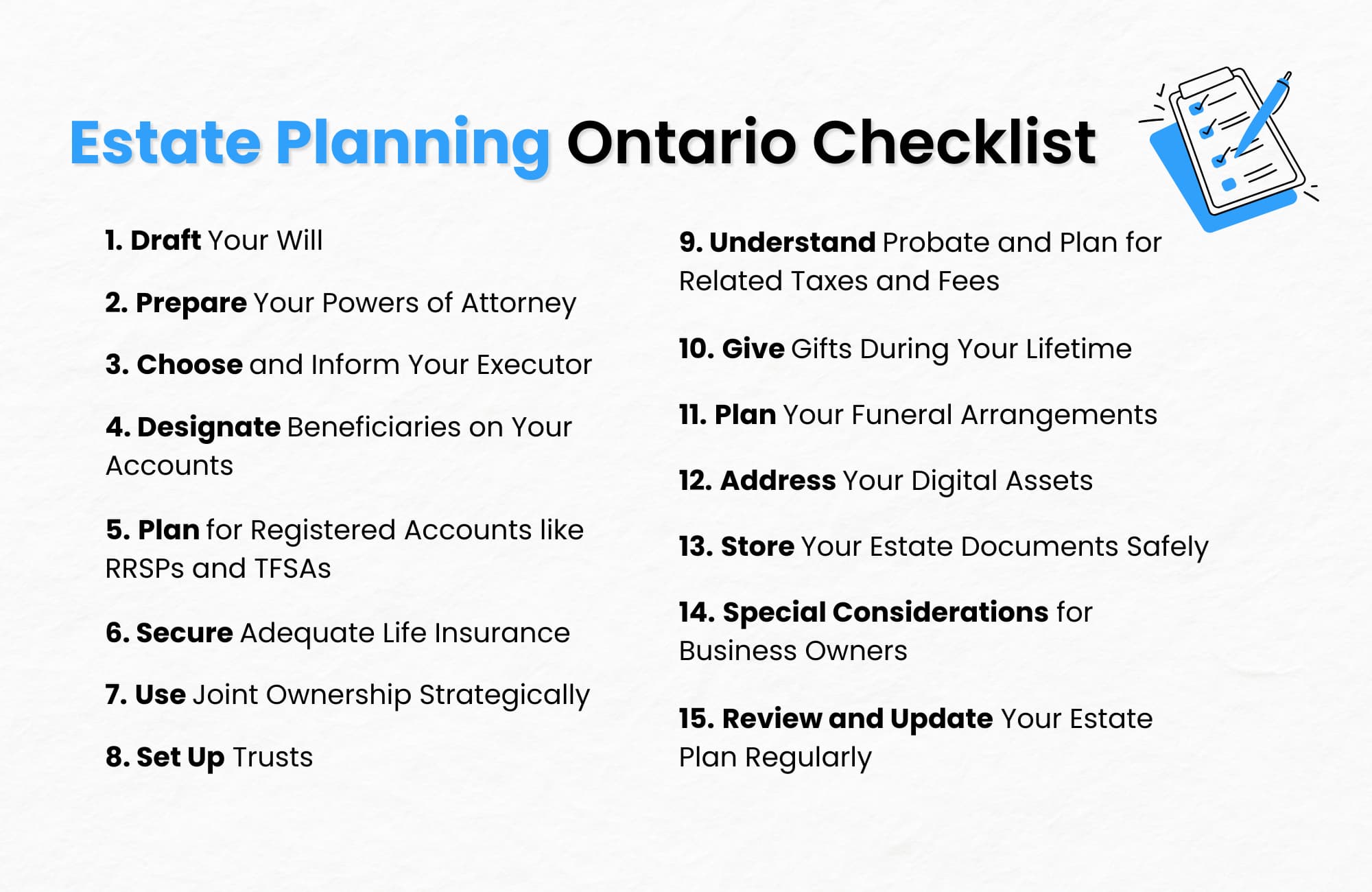
If property division is the biggest risk during life, inheritance is the biggest risk after death. Under Ontario's Succession Law Reform Act, intestacy rules recognize married spouses and blood relatives, but not common law partners. Die without a will, and your partner of twenty years receives nothing automatically.
The only fallback is a dependant's support claim, which forces the surviving partner to prove dependency in court during an already traumatic time. The process is slow, expensive, and emotionally draining, with no guaranteed outcome.
The fix is simple but requires action: both partners need valid wills naming each other as beneficiaries. Update beneficiary designations on insurance, pensions, and RRSPs. Consider joint ownership of major assets. Establish powers of attorney for personal care and property. These steps ensure your partner is protected, but too many couples skip them, assuming the law will recognize their relationship.
Tax Implications of Common Law Status
Common law status significantly affects your taxes. Under CRA rules, you must report your status after 12 consecutive months of cohabitation, or immediately if you have a child together. Update the CRA within 30 days of becoming common law, and again by December 31st of any separation year.
Failure to report can trigger reassessments and clawbacks of benefits like the GST/HST credit, Canada Child Benefit, and Ontario Trillium Benefit. Intentional misrepresentation may result in penalties.
Once recognized, you gain access to spousal tax credits, transfer of unused credits, combined medical expense claims, and pension income splitting after age 65. However, income-tested benefits like the Ontario Trillium Benefit are calculated on combined household income, which may reduce your entitlement. Legal Aid Ontario eligibility and property tax deferrals for seniors also consider household income, so status changes matter.
The Push for Reform: What 2026 May Bring

The outdated framework for common law couples is facing mounting pressure. British Columbia already grants property division rights to common law couples after two years of cohabitation, providing a model Ontario could follow.
In 2026, Ontario is actively examining whether its approach remains appropriate. No major legislative overhaul has passed yet, but the momentum favors greater protection. Family lawyers, academics, and advocacy groups are pushing for reform, arguing that partners who build lives together should not be left destitute simply because they never married.
Reform would likely be incremental rather than revolutionary. One possibility is extending property equalization to common law couples after a longer cohabitation period, such as five or ten years. Another is creating a statutory framework tailored specifically to common law relationships. Whatever the form, 2026 may mark a turning point in how Ontario treats unmarried partners.
Non-Court Dispute Resolution: The Growing Trend
Family courts in Ontario are overwhelmed, with backlogs stretching cases over years. For separating common law couples, this means prolonged uncertainty and skyrocketing legal bills.
In response, Ontario is aggressively promoting non-court dispute resolution (NCDR). Mediation, collaborative law, arbitration, and private financial dispute resolution are becoming the preferred alternatives. They are faster, less adversarial, and significantly cheaper than litigation.
For common law couples, NCDR is especially valuable. Property disputes involving unjust enrichment and constructive trust claims are notoriously complex and expensive in court. Mediation allows couples to craft customized agreements that fit their specific circumstances without leaving the outcome to a judge.
Courts are increasingly encouraging, and sometimes requiring, parties to attempt NCDR before proceeding to trial. This trend will expand through 2026, giving common law couples more efficient paths to resolution.
Technology and Family Law: Digital Tools for Common Law Couples
Technology is reshaping how common law couples protect themselves. Digital platforms now allow couples to draft cohabitation agreements with lawyer oversight at a fraction of traditional costs. These tools walk you through property division, support, and debt allocation, ensuring nothing critical is missed.
Online dispute resolution is also gaining ground. Virtual mediation, digital document sharing, and electronic filing are streamlining separations. For couples without the resources for lengthy court battles, these technologies offer affordable, efficient resolution.
Looking ahead, artificial intelligence will play a larger role in family law. AI tools can predict case outcomes, analyze financial disclosures, and identify optimal settlement strategies. They will not replace human judgment, but they will enhance it. Common law couples who embrace these tools will be better positioned to protect their interests in 2026 and beyond.
Protecting Yourself: Essential Steps for Common Law Couples
Waiting for legislative reform is not a strategy. Here is what you must do now:
Get a cohabitation agreement. This contract specifies how property and support will be handled upon separation. Cost ranges from $1,500 to $3,500, but it can save tens of thousands later.
Complete your estate planning. Both partners need wills naming each other as beneficiaries. Update insurance and pension beneficiaries. Consider joint ownership of major assets. Establish powers of attorney for personal care and property.
Report your CRA status correctly. Notify the CRA within 30 days of becoming common law, and again by December 31st of any separation year. Take advantage of available tax credits while staying compliant.
Document your contributions. Keep records of financial contributions to assets owned by your partner, as well as non-financial contributions like renovations and childcare. This evidence is crucial if you ever need to make a trust or unjust enrichment claim.
Seek legal advice early. Do not wait for a crisis. A single consultation can clarify your rights and help you implement protective measures while your relationship is stable.
The Role of Cohabitation Agreements in 2026

As the legal landscape shifts, cohabitation agreements are becoming non-negotiable for serious common law couples. They fill the gaps left by current law, offering customized protections that reflect your unique circumstances.
A well-drafted agreement covers property division, spousal support, debt allocation, and even pet custody. It specifies what happens to the family home, how joint accounts are divided, and whether ongoing support will be paid.
In 2026, these agreements offer something reform cannot: certainty. Even if Ontario eventually extends property rights to common law couples, an agreement lets you define your own terms rather than relying on default legal rules.
Discussing a cohabitation agreement early is an act of care, not distrust. It ensures that if the relationship ends, both parties are treated fairly. Lawyers report surging demand for these agreements, particularly among older couples in second relationships and younger couples intentionally choosing not to marry. This trend will only accelerate as awareness of common law vulnerabilities spreads.
Looking Ahead: Predictions for Common Law Ontario Beyond 2026
Several predictions are emerging for the future of common law rights in Ontario:
Incremental reform is likely. Ontario may phase in property protections after extended cohabitation periods, balancing protection with individual autonomy.
The marriage gap will narrow. Common law partners may eventually gain automatic inheritance rights after a certain period, or enhanced estate standing without proving dependency.
NCDR will become mandatory. More mediation or collaborative law requirements will likely precede court action for property disputes, easing court backlogs.
Technology will dominate. Blockchain-based relationship contracts, AI estate planning tools, and virtual mediation platforms will become mainstream.
Societal pressure will grow. As common law relationships become the norm, political demand for comprehensive reform will intensify. The question is no longer if Ontario will modernize, but when and how.
Frequently Asked Questions About Common Law Ontario
Conclusion
Common law Ontario relationships exist in a legal gray area that leaves partners dangerously exposed. While spousal support and some tax benefits offer partial protection, the absence of automatic property division and inheritance rights creates devastating gaps.
As 2026 progresses, reform conversations are accelerating. Demographic shifts and fairness concerns are pushing Ontario toward modernization. But legislative change is slow, and couples cannot afford to wait.
The only reliable strategy is proactivity. Cohabitation agreements, estate planning, tax compliance, and legal documentation are essential tools for protecting yourself in a system that does not automatically recognize your relationship.
Whether you are newly cohabiting or have been together for decades, understanding your rights under common law Ontario and securing your financial future is the most important investment you can make. The law may eventually reflect modern realities, but until then, knowledge and preparation remain your strongest defenses.